Loading
JulianKent Development Stratagem LTD
  • Home
  • About
    • Our Mission
    • Why Choose JKDS
    • Feedback
  • Stratagem
  • Brokerage
  • Property Management
  • Contact
  • Click to open the search input field Click to open the search input field Search
  • Menu Menu
  • Link to WhatsApp
  • Link to Facebook

Zillow fires back against Compass’s claims of ‘irreparable harm’

Zillow is not buying Compass’s claims that its listing standards policy has or ever will cause “irreparable harm” to the nation’s top brokerage by sales volume.

On Monday, the listing portal giant filed two letters in response to Compass’s motion for a preliminary injunction and its motion for expedited discovery. 

The responses come just a week after the Robert Reffkin-helmed brokerage filed its suit against Zillow, claiming that the portal has colluded with Redfin and eXp Realty on its listing standards policy. Compass claims Zillow enacted the policy to maintain an alleged monopoly over home searches. 

In a letter to Judge Jeannette A. Vargas, Beau Buffier of Wilson Sonsini Goodrich & Rosati — Zillow’s lead counsel — expressed his client’s opposition to Compass’s request for expedited discovery. He asked the court to either deny the request or wait until Zillow has filed its opposition to Compass’s motion for a preliminary injunction, enjoining it from enacting its listing standards policy. 

Matter of urgency?

Zillow claims that because Compass waited nearly three months to file the suit and is proposing a three-month schedule for resolving the dispute, no emergency exists.

Additionally, Zillow argues that by waiting this long, Compass cannot claim that it faces “irreparable harm.” Zillow’s policy went into full effect on Monday and will remain in effect unless the court grants Compass’s preliminary injunction.

“Compass’s claimed irreparable injury and need for urgent relief ring hollow when Compass waited nearly three months to bring suit and is willing to wait three more months before any hearing on its motion,” the letter states. 

According to Zillow, the injuries that Compass allege “are either compensable through damages (if Compass prevails) or are too speculative to support a preliminary injunction.” The letter also argues that Compass fails to articulate why discovery is needed to avoid “irreparable harm” or decide its motion for preliminary injunction. 

“Nowhere does the Discovery Motion articulate why any evidence is necessary to decide the PI Motion or avoid irreparable harm,” the letter states. “This is not a situation, for example, where evidence may be lost.”

In addition to these claims, Zillow also argues that “Compass has failed to “plausibly allege antitrust standing, a proper relevant market, or market power, among other deficiencies.”

“At its core, Compass complains that Zillow has a duty to carry Compass for-sale listings that Zillow does not want to carry, a highly disfavored and inactionable theory. Dressing up that claim in the purported mantle of conspiracy does not help, because Compass has not adequately or plausibly alleged any anticompetitive agreement.” the letter states.

Buffier and Zillow also argue that a victory by Compass in this suit will “impair competition rather than promote it.”

“Compass’s lawsuit seeks to reverse the technological transformation — pioneered by Zillow and others — that has allowed home sale listings to be available for free to anyone on the Internet,” the letter states.

“Compass would erect new barriers for buyers by making listings exclusive to each broker — resulting in reduced transparency, less market liquidity, and a more frustrating and less efficient experience for buyers and sellers. Compass seeks to unravel this innovation and transparency for buyers and sellers in favor of Compass’s own gain.”

Legal process timeline

If the court allows discovery to occur, Buffier and Zillow propose to narrow its scope.

Under this narrowed discovery suggestion, the court would limit Compass to just five employees and two document requests. These include communications between Zillow and Redfin or eXp Realty about Zillow’s listing standards, Compass’s three-phase marketing strategy and/or pre-MLS or off-MLS marketing strategies.

In addition to this letter, Compass and Zillow filed a joint letter that addresses seven questions Vargas wanted answered before Tuesday’s conference. That meeting will focus on the discussion over Compass’s motion for a preliminary injunction. 

In the letter, Zillow reiterated its position that discovery is not needed, claiming that discovery in an antitrust case can be very expensive. As such, Zillow feels discovery should be limited unless the court feels it is absolutely necessary, and it asked the court for reciprocal discovery rights if Compass’s motion for expedited discovery is granted. 

Compass envisions between six and eight weeks for discovery to support its motion for a preliminary injunction. It said that if this process is delayed, it would suffer a great deal of harm. The proposed discovery would include document production, depositions and expert testimony.

In contrast, Zillow believes its suggested discovery period could be completed in a few weeks. Additionally, Zillow questioned Compass’s introduction of requests for expert testimony and depositions, which were not included in its initial motion for expedited discovery. 

Compass is also calling for a five-day hearing after discovery concludes to present testimony on its claims of irreparable harm and an alleged antitrust conspiracy. Zillow disagrees with this and instead proposes that the court decide on Compass’s motion for preliminary injunction after Zillow files its opposition brief. 

According to the letter, Zillow will file its opposition to Compass’s preliminary injunction motion by July 18. Compass will file its reply by Aug. 1 if the court denies its motion for discovery.

Additionally, Zillow is planning on filing a motion to dismiss the suit by Aug. 22, or 14 days after the court rules on the preliminary injunction motion. Compass indicated that it intends to file an amended complaint if any or all of its claims are dismissed.

July 1, 2025/0 Comments/by JKents
https://www.juliankent.com/wp-content/uploads/2025/11/logo.png 0 0 JKents https://www.juliankent.com/wp-content/uploads/2025/11/logo.png JKents2025-07-01 00:01:132025-07-01 00:01:13Zillow fires back against Compass’s claims of ‘irreparable harm’

15 real estate lead generation ideas (+ expert tips & tools)

The world of real estate is constantly in flux, yet one thing remains true: Lead generation is one of the most important requirements for maintaining a successful real estate business. In today’s economy, with interest rates on mortgages stubbornly perched around 7% and dwindling inventory in most states, today’s agents must get creative to keep a fresh pipeline of leads coming through the door.

This article is your compass through these challenges, equipping you with the most effective real estate lead generation ideas and strategies to thrive. From upgrading your real estate website with eye-catching and functional marketing tools, to harnessing AI and a few other unconventional tactics, we explain the best lead generation ideas for real estate agents, split into categories for easy navigation. Let’s get to it!

Digital lead generation ideas

According to the National Association of Realtors (NAR), roughly 97% of homebuyers use the internet in their home search. Leveraging the power of the internet will not only help you reach a wider audience and capture potential leads, but it’s also necessary for establishing basic credibility.

Here are some tried and true digital marketing strategies:

1. Build website credibility through expert features and backlinks

Start by getting featured on other websites, through guest blog posts, interviews or expert quotes, which will increase your visibility and drive traffic to your site. This is a technique called backlinking. It not only helps to boost your SEO but will also help you become a trusted authority in your market.

💡Expert insight: Learn how to set up backlinks (or hire an agency who specializes in this) so that your website appears in articles and blog posts on other sites. This will help establish credibility as a leading expert in your field, while inviting readers outside your existing audience to visit your website.

Tool to try: Placester

Screen displaying website building tools to the left and graphics to the right.
Website builder for real estate agents (Source: Placester)

A real estate agent’s website should be the foundation of their online presence and needs to have more than just property listings in order to attract leads. Placester makes building lead-generating websites easy with its customizable templates, built-in blogging tools and IDX listing integration.

Its SEO-friendly design allows agents to create branded content while driving more traffic to your site – in turn capturing more leads. By consistently posting helpful blog posts, like market updates, homebuying tips or neighborhood guides, you’ll give people a reason to keep visiting your site, and sharing your content on their own social media pages.

Visit Placester

2. Use predictive analytics to target the right leads

Artificial intelligence (AI) is here to stay. Predictive analytics tools use AI to identify homeowners that are most likely to make a move in the next six to twelve months. This technology allows you to focus on high-intent prospects, instead of casting a wide net with the hope of catching one fish.

💡Expert insight: As a real estate professional, you can utilize AI machine learning to find local leads in a more targeted way. Gone are the days of shouting into the void. Instead, use an AI tool that can better predict a customer’s needs based on their prior search history and other online behavior. Agents use predictive analytics tools to pinpoint likely sellers in high-turnover neighborhoods. This leads to better conversion rates and more closed listings from your targeted marketing campaigns.

Tool to try: Smartzip

Geographical farming map showing analytics data from Smartzip.
SmartTargeting within the farm you choose (Source: Smartzip)

Smartzip uses predictive analytics to identify potential sellers in your area. This data-driven approach allows you to target the right homeowners and turn them into leads. Smartzip scores properties based on how likely a homeowner is to sell in the coming months. This approach allows you to focus your direct marketing efforts on higher probability prospects.

Visit Smartzip

Related article


FI-real-estate-seller-leads (1)


Generate real estate seller leads: 11 proven strategies + tools

3. Create intelligent lead nurture sequences

Creative, engaging and personalized nurture sequences are essential for both effective real estate lead generation and client conversion. Throughout the buyer’s journey, effective lead nurturing keeps agents connected to leads through automated, behavior-driven messages tailored to specific needs. This personalized approach enhances engagement and builds relationships that last decades.

💡Expert insight: You’ll want to track your customer from when they first share their email address with you (lead capture) to when they become a client, and beyond. You never know  – the 20 or 30-something buying their first starter home with you may grow into a lifelong client who turns to you when they are ready to upsize or buy a vacation home.

Tool to try: Zurple

Laptop and mobile views of the analytics from Zurple.
Automated lead pipeline management (Source: Zurple)

Zurple is an AI-powered platform that uses behavioral data and automation to engage leads. It tracks user behavior on your website and delivers personalized responses to boost lead conversion. Additionally, Zurple’s automated pipeline management helps identify the most promising leads, notifying agents when they become hot leads.

Visit Zurple

Social media strategies

Social media is a gold mine for real estate lead generation. There’s no better way to gain your future clients’ trust than to post relatable, personable content on channels like Facebook and Instagram. Here are some tactics to make the most of your social media efforts.

4. Start a hyperlocal Facebook group

Consider starting your own Facebook group focused on your target market to help you build an online community while positioning yourself as a local expert. The key here is to ensure that the conversation is light and informational – not salesy.

💡Expert insight: Create a resource and offer value that will benefit the people in your desired target market. Share helpful content like local events, small businesses and neighborhood news – like yard sales. Of course you’ll want to post any available listings or open houses hosted by you, your team or brokerage. Just be sure that’s not the only thing you’re pushing to the group. Remember, the goal is to build relationships by providing others with something of value that they can actually use. This will keep visitors coming back to your group time and time again.

5. Use short-form video to connect and convert

Short-form video is one of the most personalized and emotionally compelling forms of media. Post daily updates to your Instagram Stories, Reels, TikTok and/or YouTube pages to engage with potential buyers and help prospects get to know you, relate with you and trust your judgment.

💡Expert insight: Let your personality shine through and let your audience get to know you, for you. Use it to give a behind-the-scenes look at new listings, share tips, market updates or even lighthearted moments from your day. These videos help potential clients feel like they know you before they even reach out to you. This leads to higher lead conversion rates and more closed deals.

6. Utilize Facebook ads

Leverage paid Facebook ads to reach a targeted audience based on specific geographics like location, interests and life events. Facebook’s targeting tools let you speak directly to people most likely to convert.

💡Expert insight: Facebook can be a very powerful tool, and with millions of members worldwide, you’re bound to connect with potential clients if you use it strategically. Create targeted ads aimed at your niche within your service area. Offer something of value, like a free first-time homebuyer checklist, that can be downloaded in exchange for their information. Then, simply add them to your lead nurture process and watch your business grow.

Tool to try: Coffee & Contracts

Four social media marketing examples outlined in white.
Social media and reels templates (Source: Coffee and Contracts)

Coffee and Contracts saves you time by providing ready-made, branded content that’s ready to post. Their content builds your brand through monthly content calendars and customizable templates that speak directly to your target audience. Whether you’re an agent just starting out or a busy agent looking to put more time back in your day, Coffee and Contracts can help you create professional content and boost engagement.

Visit Coffee and Contracts

Use code HW15 for $15 off your first month

In-person lead generation ideas

While the digital world is certainly vital for generating real estate leads, personal connections can be just as powerful. Here are some strategies for generating leads in person.

7. Host unforgettable open houses

Open houses are often underestimated as a lead generation tool. To maximize their potential, develop a well-thought-out strategy. Effective marketing can attract a substantial number of visitors. Leverage in-person marketing, organic social media promotion and paid advertising to create a buzz around your open houses. When executed correctly, open houses will lead to a revolving door of new clients and leads.

💡Expert insight: Promote your open house ahead of time using digital and physical marketing – like homebuyer guides. Make it memorable with small touches like snacks, refreshments or a giveaway. During the open house, use digital sign-in sheets to capture accurate lead contact information to connect directly to your CRM.

Tool to try: Curb Hero

Tablet displaying a qr code with sign-in instructions to the left and a cell phone with property listing details to the right.
Digital open house sign-in sheets (Source: Curb Hero)

Curb Hero is a free digital sign-in app designed specifically for real estate agents holding open houses. Instead of sifting through handwriting that’s hard to read, have your visitors sign-in using a QR code or tablet. Once they input their contact information, it will automatically be synced to your connected CRM, allowing for more efficient follow-up. Curb Hero allows you to customize the sign-in form with your personal branding, add additional questions and even automate follow-up messages – all right from your phone.

Visit Curb Hero

Related articles


Featured image - open-house-sign-in-sheets (1)


Open house sign-in sheets savvy agents are leveraging to get more leads


FI-open-house-ideas


23 creative open house ideas to drive foot traffic, get leads and sell fast

8. Host a first-time buyers’ workshop

Partner with a local community organization, neighborhood association or nonprofit education center to share information with prospective first-time homebuyers. These seminars serve as a win-win, offering helpful information for potential homebuyers, brimming with questions, and also positioning you as a go-to expert for all their inquiries.

💡Expert insight: Personally, I launched my career by hosting first-time homebuyer workshops – and it continues to be one of the best ways I’ve grown my business. I partnered with a lender and a home inspector to host the event and shared the costs. Years later, I still receive calls from people who attended that remember me as the go-to local expert.

9. Set up a local booth

Face-to-face conversations are the most effective way to build trust. Set up a branded booth at local farmers markets, grocery stores or other popular stores at least once per month – preferably on the weekend. It’s a low pressure way to get your name out to the public and allows them to engage with you and ask questions.

💡Expert insight: Consider having a different theme every month. Even if you’re changing locations each month, you may run into the same people, and you want to have something new to offer. Give away free branded swag geared to help break the ice. Everyone loves a good reusable tote, koozies or coupons to local hotspots. It’s these small touches that will help spark conversation and make a lasting impression.

Traditional lead generation methods

Don’t underestimate the effectiveness of traditional lead generation methods. These time-tested strategies still work to boost your business. 

10. Direct mail campaigns that get noticed

Direct mail still works when it’s personalized and well intentioned. Send targeted marketing materials, such as postcards or brochures, to potential clients in specific neighborhoods or zip codes. Traditional formats like “Just Sold” or “Just Listed” cards help target potential clients looking to move within the area. More general options like sending branded recipe cards or local sports schedules are great for hanging on the fridge.

💡Expert insight: The key to generating real estate leads through direct mail is to create a personal connection. Be sure to include your headshot, as well as contact information and an office address where people can stop by for questions. You want potential clients to feel like they know exactly where to find you when they’re ready to talk.

Tool to try: Wise Pelican

Laptop displaying two postcard examples from Wise Pelican.
Create direct mail campaigns in minutes (Source: Wise Pelican)

Wise Pelican puts real estate agents in the driver’s seat when it comes to direct mail marketing by offering a variety of customizable postcards and mailing list tools. Creating an account is free, there is no minimum order and you can track every mailing sent. It’s an easy and affordable way to launch a direct mail campaign, no matter how big or small your target audience may be. Plus, Wise Pelican’s user-friendly dashboard lets you monitor response rates in real time.

Visit Wise Pelican

11. Make the most of community events

Word-of-mouth marketing doesn’t cost much, but a lot of personal time is invested. Showing up to community events can pay back dividends once you establish yourself as a trusted guide among homebuyers in your town.

💡Expert insight: It’s worth taking a few hours per week to interact with potential leads at garage sales, fundraisers, recreational events, school gatherings and recitals. While there’s no need to be salesy about it, carrying a few branded pens or posting a tasteful decal on your car will also help you stay top-of-mind to those you interact with.

12. Tap into your sphere of influence

Your family, friends, past clients, neighbors and other professional contacts – like your dentist – are often one of the most overlooked lead resources. Your sphere of influence are the people you already know and who trust you. This makes them more likely to work with you or refer people they know to work with you.

💡Expert insight: Stay top-of-mind with your sphere of influence through regular touchpoints. Stay engaged by sending handwritten notes, quick check-in texts, commenting on social media or sending a monthly newsletter. Mix it up and do something different each time you reach out. You don’t need to send something every week, once a quarter is sufficient. They know you, the goal is to make sure they don’t forget you.

Related articles


FeatureImage-sphere-of-influence-real-estate


7 ways to expand your sphere of influence in real estate in 2025


Featured image - real-estate-referrals


12 real estate referral strategies that actually generate leads

Out-of-the-box ideas

To truly excel in real estate lead generation, you need to think outside the box. Here are some creative strategies to try. 

13. Build local strategic partnerships

Don’t limit your partnerships to mortgage lenders and title reps – explore relationships with local businesses. This includes repair companies, lawn care services, restaurant owners and divorce attorneys. Think about it, their clients are going to need help selling their former homes and buying two new ones.

💡Expert insight: When choosing your alliances, it’s important to build a reciprocal relationship. Both parties should benefit equally. By providing value to your partner’s clients and maintaining these connections over time, you open the door to potentially receiving referrals from them.

14. Start a podcast to grow your local influence

If you serve an easily identified niche, such as real estate investors, military families, millennial homebuyers, first-time homebuyers, luxury homebuyers or even in specific metropolitan areas, establish a personal brand to serve those clients by recording an educational podcast.

💡Expert insight: Keep it conversational and focus on delivering real value.  Invite local professionals like lenders, builders and inspectors to join you as guests. They’ll be able to add more value to your content by sharing their own experiences on topics you discuss, further deepening the conversations. Hopefully, they’ll share the podcast with their own network which will organically expand your reach.

Tool to try: Buzzsprout

Cell phone displaying buzzsprout data analytics.
Podcasting insights (Source: Buzzsprout)

Buzzsprout makes it easy to start learning about podcasting. You can launch, host and grow your real estate podcast with user-friendly tools, detailed analytics and automated distribution to some of the most popular podcast listening platforms. It’s perfect for agents looking to build and connect with their audience.

Visit Buzzsprout

15. Use quizzes to generate fun, low-pressure leads

Websites are one of the most underutilized tools in an agents real estate toolkit. Most agents think these sites are meant to provide information and display available homes for sale. What they don’t know is how these sites can be used to capture leads by adding interactive, value driven features. One of the most fun ways to capture real estate leads from your website is by designing a quiz to educate your target clients.

💡Expert insight: Make sure the quiz aligns with your personal brand. For instance, if you focus on selling mid-century modern homes, your quiz should be about how to choose the right mid-century floor plan for your clients’ family size. If you focus on a luxury niche, create a quiz to help clients identify their interior design style then send an email follow-up a few days later to pair them with a local designer specializing in that style.

Related articles


FeaturedImage-top-real-estate-lead-generation-companies


The 8 top real estate lead generation companies for 2025


FeaturedImage-best-real-estate-lead-generation-websites


The 7 best real estate lead generation websites for 2025


FeaturedImage-buy-real-estate-leads


8 best places to buy real estate leads in 2025

Real estate lead generation ideas: FAQs

What is the best time to generate real estate leads?

The ideal time to generate leads is all year round, though you can create short-term marketing campaigns around seasonal events such as summer break, back-to-school, Halloween and other holidays. Keep your lead generation efforts consistent to ensure a steady flow of potential clients.

Are there any free lead generation methods?

Yes, there are free methods, such as word-of-mouth marketing, organic social media traffic and networking events. However, investing in quality lead generation tools often yields better results.

Where do real estate agents get most of their leads?

Agents and brokers often obtain the majority of their leads through referrals and personal networks. Past clients, friends, family and professional connections are valuable sources of leads. When you’re ready to take lead generation to the next level, online channels play a significant role in lead generation.

What is the best way to generate leads?

The best way to generate leads may vary depending on individual preferences and market dynamics. However, a holistic approach that includes a strong online presence, active networking and leveraging the latest technology is often considered the most effective. It’s also helpful to store and manage your leads in a customer relationship management (CRM) system. Combined with an engaging website and compelling content, using a CRM can be a powerful way to nurture leads in your pipeline.

The full picture: Real estate lead generation ideas

The real estate landscape is dynamic and changes quickly. Real estate agents must constantly adapt to market conditions and remain ahead of the game. Generating real estate leads will always be a top priority. These real estate lead generation ideas will help you stay ahead of the curve and secure your place in this competitive industry.

Real estate advice + top tech, lead gen & marketing tools — delivered to your inbox.

Get expert advice, independent reviews and product recommendations from our editorial team of experienced real estate agents, brokers and coaches.

July 1, 2025/0 Comments/by JKents
https://www.juliankent.com/wp-content/uploads/2025/11/logo.png 0 0 JKents https://www.juliankent.com/wp-content/uploads/2025/11/logo.png JKents2025-07-01 00:01:132025-07-01 00:01:1315 real estate lead generation ideas (+ expert tips & tools)

NAMB issues support for CHLA white paper on LO compensation

The National Association of Mortgage Brokers (NAMB) on Monday issued a letter of support for the Community Home Lenders of America (CHLA)’s white paper on LO compensation reform.

CHLA‘s white paper, released last week, urged Congress to roll back the loan originator compensation rule to focus on its original purpose — a ban on yield spread premiums (YSP), a predatory practice from the financial crisis of the 2000s in which brokers were paid extra by lenders to place borrowers in loans with higher interest rates.

The proposal follows the Consumer Financial Protection Bureau (CFPB)’s early June submission to the White House Office of Management and Budget (OMB), which includes possible changes to LO compensation and mortgage servicing rules under the Truth in Lending Act.

NAMB‘s letter explained that the trade group views YSP, which is now recognized as lender-paid compensation, as “a legitimate and consumer-beneficial method of structuring mortgage transactions.”

But NAMB also said it opposes the current “rigid” interpretation of loan originator compensation regulations, arguing that the rules hinder consumer choice and restrict flexibility.

“We support a return to the original legislative intent: to eliminate abusive practices, not to overregulate legitimate compensation arrangements within a firm,” the letter read.

“NAMB advocates for a return to common-sense regulatory approaches that distinguish abusive behavior from today’s transparent and consumer-focused lending models,” NAMB President Jim Nabors said.

“Responsible use of lender-paid compensation is an essential tool in offering flexible, borrower-centric financing options. We urge regulators and lawmakers to update and align LO Comp rules with the realities of today’s transparent and competitive mortgage market to protect, rather than hinder, consumers.”

NAMB’s letter recommends legislative support, saying that it “supports legislation to limit LO Comp restrictions to transactions between unrelated entities, preserving lender-paid compensation and exempting a firm’s internal employee or broker compensation structures.”

NAMB also calls for regulatory clarifications from the CFPB.

July 1, 2025/0 Comments/by JKents
https://www.juliankent.com/wp-content/uploads/2025/11/logo.png 0 0 JKents https://www.juliankent.com/wp-content/uploads/2025/11/logo.png JKents2025-07-01 00:01:132025-07-01 00:01:13NAMB issues support for CHLA white paper on LO compensation

Home equity cushions homeowners against economic shocks

The most recent National Mortgage Database (NMDB) Aggregate Statistics report from FHFA reveals the significant amount of home equity that American households possess. This should put an end to any discussions suggesting that the housing market is on the verge of a mass foreclosure crisis or that national home prices will crash like they did from 2007 to 2011.

Vast home equity cushion

Keep this very simple: 82% of homeowners in America have at least 30% of equity in their homes. Because we haven’t experienced a massive credit housing boom in the past 14 years, we simply can’t replicate the debt expansion or the cash-out debt expansion that was common in the run-up from 2002 to 2005, with mortgage credit demand. As a result, households that have lived in their homes for an extended period have accumulated substantial home equity, enabling them to sell and purchase another home if they choose to do so.

This situation differs from the years following the housing bubble crash, when nearly 15 million loans were under stress, and many late-cycle homebuyers had little to no equity. During that time, people were forced to sell in an underwater market.

chart visualization

Down payment and loan-to-value data are very different

As shown in the chart below, the loan-to-value ratio for American households is very low. How does this compare to the housing bubble crash years? The loan-to-value data averaged roughly 57% from 2005 to 2006. From 2008 to 2012, it increased to around 85% and remained at this level for several years. Currently, we are at 47%.

chart visualization

What is often overlooked in housing economics is that the percentage of down payments decreased from 2001 to 2008, meaning American households were putting less money down for their home purchases. In contrast, data from the National Association of Realtors (NAR) shows that down payments have been steadily increasing for many years.

Homeowners have long-term fixed debt products

Unlike the 2008 housing crisis, where many homeowners had adjustable-rate mortgages (ARMs) that were set to increase their payments to unsustainable levels, today’s mortgage market predominantly features fixed-rate loans with 30-year terms. Although the percentage of loans with mortgage rates above 6% is rising, the current loan structures mean that we will not see the same recasting of payments that we experienced in the past. Even the ARMs issued in recent years have different debt structures and underwriting standards compared to those from before.

chart visualization

As housing tenure increases, households with fixed long-term debt costs and rising wages tend to have better financial situations. This trend reflects the advantages of having a 30-year fixed mortgage, as it allows for predictable debt costs while benefiting from increasing wages.

chart visualization

Conclusion

I wanted to make this article as simple as possible, especially with the charts that I shared above. The current equity and debt landscape is significantly better than what we experienced during the historic housing bubble crash, something the graphs clearly illustrate. The benefits of the 2005 Bankruptcy Reform Law and the 2010 Qualified Mortgage Law continue to impact us today and will do so for many decades to come. 

July 1, 2025/0 Comments/by JKents
https://www.juliankent.com/wp-content/uploads/2025/11/logo.png 0 0 JKents https://www.juliankent.com/wp-content/uploads/2025/11/logo.png JKents2025-07-01 00:01:132025-07-01 00:01:13Home equity cushions homeowners against economic shocks

Zillow fires back at Compass, saying brokerage faces no harm from its listing policy

Zillow attorneys pushed back at Compass’ request for a broad and expedited discovery, and on the brokerage’s private listing network. ‘Compass would erect new barriers for buyers by making listings exclusive to each broker.’

July 1, 2025/0 Comments/by JKents
https://www.juliankent.com/wp-content/uploads/2025/11/logo.png 0 0 JKents https://www.juliankent.com/wp-content/uploads/2025/11/logo.png JKents2025-07-01 00:01:132025-07-01 00:01:13Zillow fires back at Compass, saying brokerage faces no harm from its listing policy

Mayors back Realtor.com’s campaign to address the housing crisis

The U.S. Conference of Mayors formally endorsed a bipartisan statement to support the Let America Build campaign — a housing policy initiative backed by Realtor.com — during the organization’s annual meeting in Tampa on Sunday.

The resolution — introduced by Austin Mayor Kirk Watson — acknowledges the mounting housing affordability crisis, and it calls for policy reforms at all levels of government to increase housing supply and ease zoning restrictions.

“Homeownership was the American dream, but it’s become an impossible dream for too many people — especially young people, who want the same opportunities to make a life previous generations had,” Watson said.

“That’s why mayors across the country are tackling the affordability crisis head on and championing pro-housing policies that make it easier to put more houses on the ground and let people not only dream again, but fulfill those dreams.”

The Let America Build campaign advocates for the elimination of regulatory barriers and modernized zoning and permitting laws to speed up or allow housing development. The initiative also encourages the consideration of underutilized federal land for residential use.

“Mayors are on the frontlines of the housing crisis, and we applaud the U.S. Conference of Mayors for joining the call to Let America Build,” said Damian Eales, CEO of Realtor.com.

“This campaign is about working together with local leaders, builders, and industry partners to advocate for practical, pro-building solutions. We must break through red tape and restrictive zoning to create a future where more Americans can find a place to call home.”

According to Realtor.com, the U.S. is facing a shortfall of nearly 4 million homes, with responses from individual states varying in effectiveness. Housing advocates warn that the gap in supply is contributing to rising costs and displacement in cities and suburbs alike.

“The housing crisis demands bold, local action, and the National Association of Home Builders (NAHB) commends mayors nationwide for prioritizing housing supply and affordability,” said Jim Tobin, the president and CEO of NAHB. “We stand ready to work with local leaders to remove barriers and build the homes we need for all Americans.”

The Let America Build campaign launched earlier this year at SXSW in Austin. It has since garnered support from housing industry leaders and now the nation’s mayors.

“The National Association of Realtors is dedicated to putting the American Dream of homeownership within reach for everyone. We applaud the Let America Build campaign’s work to highlight the urgent need for action — both locally and nationally — to solve our country’s housing supply and affordability crisis,” NAR President Kevin Sears said.

“It will take collaboration across all levels of government and with partners in the public, private, and nonprofit sectors to advance lasting solutions.”

July 1, 2025/0 Comments/by JKents
https://www.juliankent.com/wp-content/uploads/2025/11/logo.png 0 0 JKents https://www.juliankent.com/wp-content/uploads/2025/11/logo.png JKents2025-07-01 00:01:132025-07-01 00:01:13Mayors back Realtor.com’s campaign to address the housing crisis

What agents must know about telemarketing consent

As class-action lawsuits continue against major real estate brokerages for alleged telemarketing violations, firms of all sizes are under increasing pressure to strengthen their compliance practices.

According to attorney Michele Shuster, a founding partner of Mac Murray and Shuster LLP, staying within the bounds of federal and state telemarketing laws isn’t just a legal necessity — it’s vital risk management in today’s regulatory climate.

“Obviously, the most important thing is [to] work with an attorney who understands telemarketing, because it’s such a unique area,” said Shuster, whose firm specializes in regulatory defense, government relations and compliance services.

“We literally start the day, every day, looking at research on the cases and seeing if there are any new developments at the regulatory agencies.”

Shuster’s comments follow recent litigation involving Compass and Keller Williams in which plaintiffs allege that unsolicited calls were placed without proper consent, in violation of federal Do Not Call (DNC) regulations.

“In both of these cases, it was really the do not call laws that they ran into problems with,” Shuster explained. “And if they would have scrubbed against the Do Not Call list, or if they would have had consent, or if they’d made an inquiry to them, they wouldn’t have run into these problems.

“That’s really the three main areas that real estate agents should be focusing on.”

Keller Williams was also named in a separate Telephone Consumer Protection Act (TCPA) suit that was filed in Texas in April 2024. The suit was dismissed earlier this year due to a failure to state a claim. 

Meanwhile, changes to the TCPA — including a one-to-one consent rule — went into effect late this past January.

Under the consent rule, anyone soliciting a consumer’s business through a phone call or text message must obtain their written consent prior to sending robocalls or texts.

The consent provided by the individual must be “a clear and conspicuous disclosure that the consumer will receive robocalls or robotexts and the content of those contacts must be logically and topically related to the website where the consumer gave consent,” according to the Federal Communications Commission (FCC).

Offers to buy vs. offers of services

Shuster emphasized a key legal distinction in this area — calls that involve a bona fide offer to purchase a home versus calls that promote an agent’s services.

“There’s the people or the agents or the real estate companies who are reaching out that truly just want to buy the home, and so they’re making an offer to purchase that home,” she said. “And there’s a case recently where the court ruled on a summary judgment motion that an offer to purchase is not a telemarketing call, and therefore they dismissed the case.”

But Shuster warned that when an agent offers listing services or marketing support to help sell a home, the rules change.

“I really want to distinguish here between … ‘I am going to buy your house. I’m not offering you any services or any of those types of things. I’m just truly reaching out to make you an offer to purchase your house’ (type of call), versus a real estate agent reaching out and saying, ‘Looks like you want to sell your house. And, you know, I can do these things to help you sell your house.’

“And that’s where they’re offering services and they’re really just supplanting a real estate agent. And that is a telemarketing call, because you’re marketing your services as a real estate agent.”

Express written consent due diligence

A cornerstone of telemarketing compliance is to obtain prior express written consent — particularly when using technologies like autodialers or prerecorded messages to contact consumers who may be on the National DNC Registry.

“Prior express written consent — which is the type of consent if you’re using regulated technology, basically — it’s consent to call somebody who may be on the Do Not Call list as well,” Shuster said.

“But prior express written consent has a very specific list of things that have to be included in consent language that you’re giving to the consumer, and the consumer is signing that and giving that back to you, basically, and saying. ‘You have my consent to call me.’

“The requirement for prior express written consent is obviously that it has to be in writing. You have to have in the consent language that the consumer is giving consent to call them using an automatic telephone dialing system or a prerecorded voice, that their consent is not required for purchase, and then they have to actually sign that. And if it’s an online form, you have to comply with eSign.”

This presents a major challenge for firms that collect leads over the phone.

“It’s really difficult to get prior express written consent over the telephone, because you can’t get a written signature with somebody over the telephone,” Shuster said. “This has really been a shock to the telemarketing world.”

When it comes to leads acquired through third-party forms, Shuster said consent is only valid if the lead identifies the specific company that will be contacting the consumer.

“What’s important is they have to identify the seller and the lead form,” she said. “In that language, they need to be giving that to the seller or the person who’s going to be making the telephone call.

“There are lead generation companies out there that get consent for the lead generation company to call them, and what they’re trying to do is find out what kind of other services that consumer might be interested in And so they try to get consent also for the seller. And the seller would be a Keller Williams or Compass, for example.”

Who’s most at risk?

While large brokerages face complex liability due to their broad networks, smaller operators are far from immune, Shuster said.

“With the large real estate companies, they have a lot of agents, a lot of independent agencies, and they have a lot of brokerages,” she said. “So in a large organization like that, it’s really important to have compliance processes and procedures that percolate down the whole the whole structure. You need to get them to other agencies and the agents and the brokers, and you have to train them on those types of things.

“If you don’t have the policies and procedures — and if you’re not giving those to the right people and you’re not training them — you have compliance risks there.”

For independent agents, “sometimes, I think it is just maybe a lack of awareness that they are a telemarketer when they’re making calls to sell their services,” Shuster said.

Consent logs and retention

Whether using websites or forms to gather leads, Shuster recommends keeping detailed and long-term records.

“If they’re using their website to collect leads, and they’ve got that consent language on their website, then they can keep electronic records for that,” she said. “It can be a database that’s collecting that info as it’s filled out. There are screen capture systems out there that will actually record that the person is there, going through the form and filling it out.

“You do have to disclose that you’re recording the movements, though, on the computer, because it’s monitoring or recording, and there are laws about that. You have to make sure you’re giving the right disclosures, but then keeping that database or keeping those screen captures, and you need to keep them for at least five years, because that’s the statute of limitations.”

Shuster offered a few candid final words for industry stakeholders.

“Make sure they reach out to a compliance attorney that understands telemarketing,” she said.

July 1, 2025/0 Comments/by JKents
https://www.juliankent.com/wp-content/uploads/2025/11/logo.png 0 0 JKents https://www.juliankent.com/wp-content/uploads/2025/11/logo.png JKents2025-07-01 00:01:132025-07-01 00:01:13What agents must know about telemarketing consent

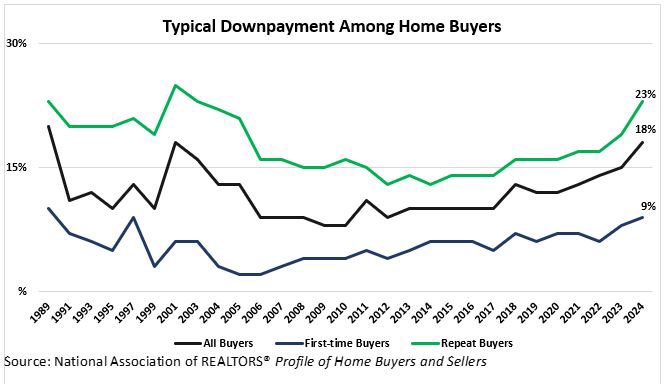
NAR: Homebuyers still have down payment misconceptions

Despite growing attention around all-cash transactions, most Americans — especially first-time buyers — continue to finance their home purchases, according to new data from the National Association of Realtors (NAR).

Among primary residence buyers, 74% financed their home purchase in 2024. That share jumps to 91% for first-time buyers, said Jessica Lautz, NAR’s deputy chief economist and vice president of research.

One of the most persistent misconceptions among aspiring homeowners is that a 20% down payment is required to buy a home.

Screenshot 2025-06-30 at 4.59.40 PM

NAR said the typical down payment for first-time buyers has remained between 6% and 9% since 2018. For repeat buyers, the figure was significantly higher last year at 23% — a reflection of rising home equity over time.

In contrast, repeat buyers put down just 13% in 2014, Lautz said.

Since NAR began collecting data in 1989, the median down payment for first-time buyers has never exceeded 10%.

“This critical knowledge informs the potential buyer on just how much to save and — just as importantly — how long that process may take,” Lautz said.

Financing options, misplaced guidance

Conventional loans remain the most common path to homeownership, but many first-time buyers also turn to government financing.

Nearly 29% of first-time buyers used Federal Housing Administration (FHA) loans, which require a minimum down payment of 3.5%. Another 9% used U.S. Department of Veterans Affairs (VA) loans, which do not require a down payment at all.

Screenshot 2025-06-30 at 4.59.57 PM

Lautz also emphasized the importance of getting accurate information.

“Unfortunately, 97% of NAR members surveyed worked with clients who consulted family members for advice instead of a real estate agent — even if the family member would not live in the home.”

She urged prospective buyers to seek professional help through mortgage brokers, housing counselors or tools like the Down Payment Resource website, which connects buyers to local and state assistance programs.

Where the money comes from

For nearly 70% of first-time buyers, their down payment came from personal savings. Another 25% relied on gifts from family or friends, which was down from a peak of 36% in 2010 when the federal government was offering a first-time homebuyer tax credit.

With the median age of a first-time buyer reaching a record high of 38, fewer people are seeking financial help from family.

“It could be uncomfortable to ask family for help in purchasing their first home,” Lautz said.

There’s also a growing trend of first-time buyers tapping into financial assets to fund their down payments. In 2024, 21% used resources such as stocks, retirement accounts or even cryptocurrency — a sharp increase from the 8% to 11% range seen between 1997 and 2002.

Inheritances are also playing a slightly larger role. Although still under 10%, the share of first-time buyers who used inherited money reached an all-time high of 7%.

As prospective buyers navigate an increasingly complex housing market, understanding realistic down payment expectations and available loan options remains crucial, Lautz said.

“Seeking the right source is better than relying on outdated information or, worse still, misinformation,” she added.

July 1, 2025/0 Comments/by JKents
https://www.juliankent.com/wp-content/uploads/2025/11/logo.png 0 0 JKents https://www.juliankent.com/wp-content/uploads/2025/11/logo.png JKents2025-07-01 00:01:122025-07-01 00:01:12NAR: Homebuyers still have down payment misconceptions

Nude model’s money woes exposed

Nude model Dina Broadhurst and her ex-partner stretched their finances to the limit Source: Supplied

Given the couple’s propensity for their Instagrammable lives to be also regularly snapped by the paparazzi, the recent on-again/off-again listing of the Darling Point apartment co-owned by nude artist Dina Broadhurst and her ex-partner, builder Max Shepherd, kept gossip column readers riveted for months until its recent sale.

The price guidance for the Etham Ave garden apartment sat at $11.5m for its abandoned December auction, and by the time of its rescheduled June auction, had dropped to $8.4m.

It apparently fetched $8m in its undisclosed pre-auction negotiations this month.

MORE: Aus pub’s $500m collapse, staff owed $7m

Dina Broadhurst and Max Shepherd have sold their Darling Point apartment pre-auction. Picture: realestate.com.au

The duplex apartment has 280sq m of indoor-outdoor living space. Picture: realestate.com.au

There has been a continuing backdrop of intricate financing of their renovation project after kicking off with a standard NAB mortgage.

The duplex apartment, with 280sq m of indoor-outdoor living space, had cost $5.2m unrenovated in 2022, which was followed by a “Cinderella transformation” by emerging interior designer, Josh Knight from Glebe.

“No expense was spared to deliver a home of high-end luxury showcasing bespoke design by Studiojos,” its marketing advised.

Though the couple had split by mid-2023 after 4½ years together, NSW Land Registry documents indicate that about April 2024, the duo secured second mortgage funding from Greg Reed’s Benchmark Property Finance.

MORE: Huge promise Hemsworths made about Byron Bay

Through the Keyhole - Dina Broadhurst

Dina Broadhurst and ex Max Shepherd. Picture: AAP/Flavio Brancaleone

The extra $500,000 finance was obtained at 24 per cent for nine months to a total 70 per cent loan to value ratio. By last September, it sat at $1.16m with the funding agreement specifying the apartment needed to be listed for sale within five months with a “reputable agent”.

By February this year, the loan expiry date had been extended to August.

It has also emerged that veteran Sydney businessman Basil Sellers had separately lent Shepherd $260,000 in 2022, with the amount owing at $358,000 last month.

Shepherd moved on and stepped out with his Vanderpump Rules star girlfriend Vail Bloom, while Broadhurst remains devoted to her 365,000-strong Instagram following and her risqué self-portraits.

One of her artworks has just been installed in the conference room of Ray White Touma Taylor in Redfern.


MORE: Wild reason Aussie has 300 homes

The post Nude model’s money woes exposed appeared first on realestate.com.au.

July 1, 2025/0 Comments/by JKents
https://www.juliankent.com/wp-content/uploads/2025/11/logo.png 0 0 JKents https://www.juliankent.com/wp-content/uploads/2025/11/logo.png JKents2025-07-01 00:01:122025-07-01 00:01:12Nude model’s money woes exposed
Page 102 of 102«‹100101102
Search Search
  • Modern Single EntryJuly 15, 2015 - 3:48 pm
  • Classic Single EntryJuly 15, 2015 - 3:48 pm
  • Classic Single Entry #2July 15, 2015 - 3:46 pm
  • MacBook PRO & SSDJuly 15, 2015 - 3:41 pm

Categories

  • No categories

JKDS is a licensed New York State real estate brokerage firm. #10351200205

Interesting Links

  • Stratagem
  • Brokerage
  • Property Management
  • Contact

Where to find us

347 Fifth Avenue
Suite 1402
New York, 10016
Phone: +1.888.559.5333

Our Office Hours

Monday-Friday: 7:00-19:00
Saturday: 10:00-17:00
Sunday: 12:00-16:00

© Copyright - JulianKent Development Stratagem LTD
  • Privacy Policy
  • Terms of Use
Scroll to top Scroll to top Scroll to top

This site uses cookies. By continuing to browse the site, you are agreeing to our use of cookies.

AcceptCloseSettings

Cookie and Privacy Settings


How we use cookies

We may request cookies to be set on your device. We use cookies to let us know when you visit our websites, how you interact with us, to enrich your user experience, and to customize your relationship with our website.

Click on the different category headings to find out more. You can also change some of your preferences. Note that blocking some types of cookies may impact your experience on our websites and the services we are able to offer.

Essential Website Cookies

These cookies are strictly necessary to provide you with services available through our website and to use some of its features.

Because these cookies are strictly necessary to deliver the website, refusing them will have impact how our site functions. You always can block or delete cookies by changing your browser settings and force blocking all cookies on this website. But this will always prompt you to accept/refuse cookies when revisiting our site.

We fully respect if you want to refuse cookies but to avoid asking you again and again kindly allow us to store a cookie for that. You are free to opt out any time or opt in for other cookies to get a better experience. If you refuse cookies we will remove all set cookies in our domain.

We provide you with a list of stored cookies on your computer in our domain so you can check what we stored. Due to security reasons we are not able to show or modify cookies from other domains. You can check these in your browser security settings.

Other external services

We also use different external services like Google Webfonts, Google Maps, and external Video providers. Since these providers may collect personal data like your IP address we allow you to block them here. Please be aware that this might heavily reduce the functionality and appearance of our site. Changes will take effect once you reload the page.

Google Webfont Settings:

Google Map Settings:

Google reCaptcha Settings:

Vimeo and Youtube video embeds:

Privacy Policy

You can read about our cookies and privacy settings in detail on our Privacy Policy Page.

Privacy Policy
Accept settingsClose