

Tune in to Inman Access as Vija Williams, head of industry at Place, tells you how to develop a winning recruiting plan and implement effective productivity systems.
The progress came even as competition for listings cooled across the country. Inman breaks down how the industry navigated the spring homebuyer season using insights powered by Market View.
Adelaide’s prized metro coastline has a brand new waterfront listing – and it’s a $1.9m knockdown.
Booth Real Estate’s Jamie Brown has just listed a deceased estate at 219 Lady Gowrie Dr, Largs Bay – on the market with an auction price guide of $1.9m – and said the property, which has been held by the same owners for the past 59 years, was an incredible offering.
“It’s been in the one family for a long time,” Mr Brown said.
SIGN UP NOW FOR OUR FREE REAL ESTATE NEWSLETTER
“It’s quite charming in a way, but it’s obviously a knockdown eventually because the money’s really coming through that whole section of coastline.
“It’s going to go well and everyone’s been trying to buy off them for years.”

219 Lady Gowrie Dr, Largs Bay. Supplied

The home’s original lounge room. Supplied

The untouched kitchen. Supplied
Presented in original condition, the home has three-bedrooms, one bathroom and all of the character charm of its 1962 construction.
But its real appeal, Mr Brown says, it what it sits on – a 620sqm allotment with a 14.32m frontage.
MORE NEWS:
How multiple renos transformed dated home
How to cut your CBD parking costs
The suburb becoming the next Unley Park
Where the latest rate cut makes it cheaper to own than rent in SA
“You could put one home on there up to a maximum of two storeys, and that’s what I would be expecting people would be looking to do here,” Mr Brown said.
“Land through there’s $3000/sqm-plus through there and Tennyson, Grange and Henley Beach is up to $5000 or even $6000/sqm.
“It’s all about your land and as you go up and down there you don’t find many shacks anymore – I call that a bit of a shack – there’s not many shacks left on our metropolitan coast.”

One of the home’s three bedrooms. Supplied

Check out the original carpet. Supplied

The spacious rear yard. Supplied

Another look at the rear yard. Supplied
The property is set to be auctioned on July 5 and Mr Brown said he expected strong interest.
“It’s early days but it’s getting very hard to secure beachfront land on these metropolitan beaches, and this is an opportunity for people who have been priced out of the beachfront at Henley, Tennyson, Grange and Somerton Park to get in on the beachfront at a very good value entry point,” Mr Brown said.
MORE NEWS
SA’s 15 surprise buyer’s markets revealed
Where SA sellers are making bank … and where they are taking a hit
SA agent crowned best in nation
Star performer recognised in historic industry first
Mr Brown said Largs was a fantastic location and offered almost a “country” lifestyle.
“Largs is fantastic because it’s right at the end of that Lefevre Peninsula,” he said.
“It’s very quiet – it’s like the dead end of the metropolitan coast really.

Largs Bay’s idyllic foreshore. Supplied

The beach at Largs Bay. Supplied
“Largs has really evolved over the last five or ten years – it’s just fantastic with the Norfolk Pines, and the beach gets wider as you go further north.
“You get a lot more sand dune as you go further north and you get more of that country feel about it.”
The post See inside the $1.9m waterfront ‘knockdown’ at Largs Bay appeared first on realestate.com.au.
Jimmy Burgess, who has decades of experience in real estate and leadership, will serve as the chief coaching officer at HomeServices of America.
Housing lottery applications are open for 143 rent-stabilized apartments at a new development in Manhattan’s Financial District. Households that earn $37,578 to $200,900 are eligible to apply, depending on the number of people you live with. Rents start at $912 for a studio.
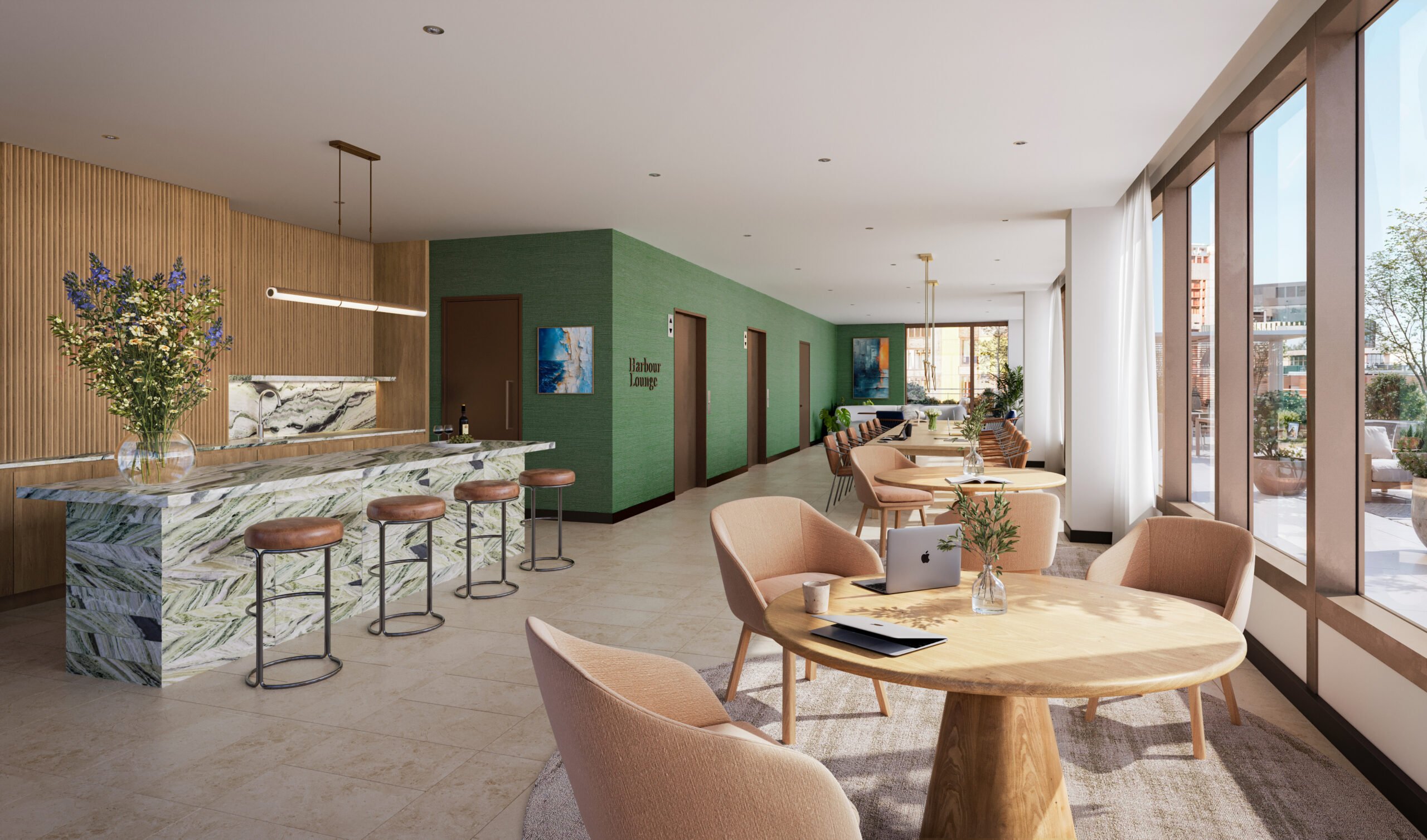
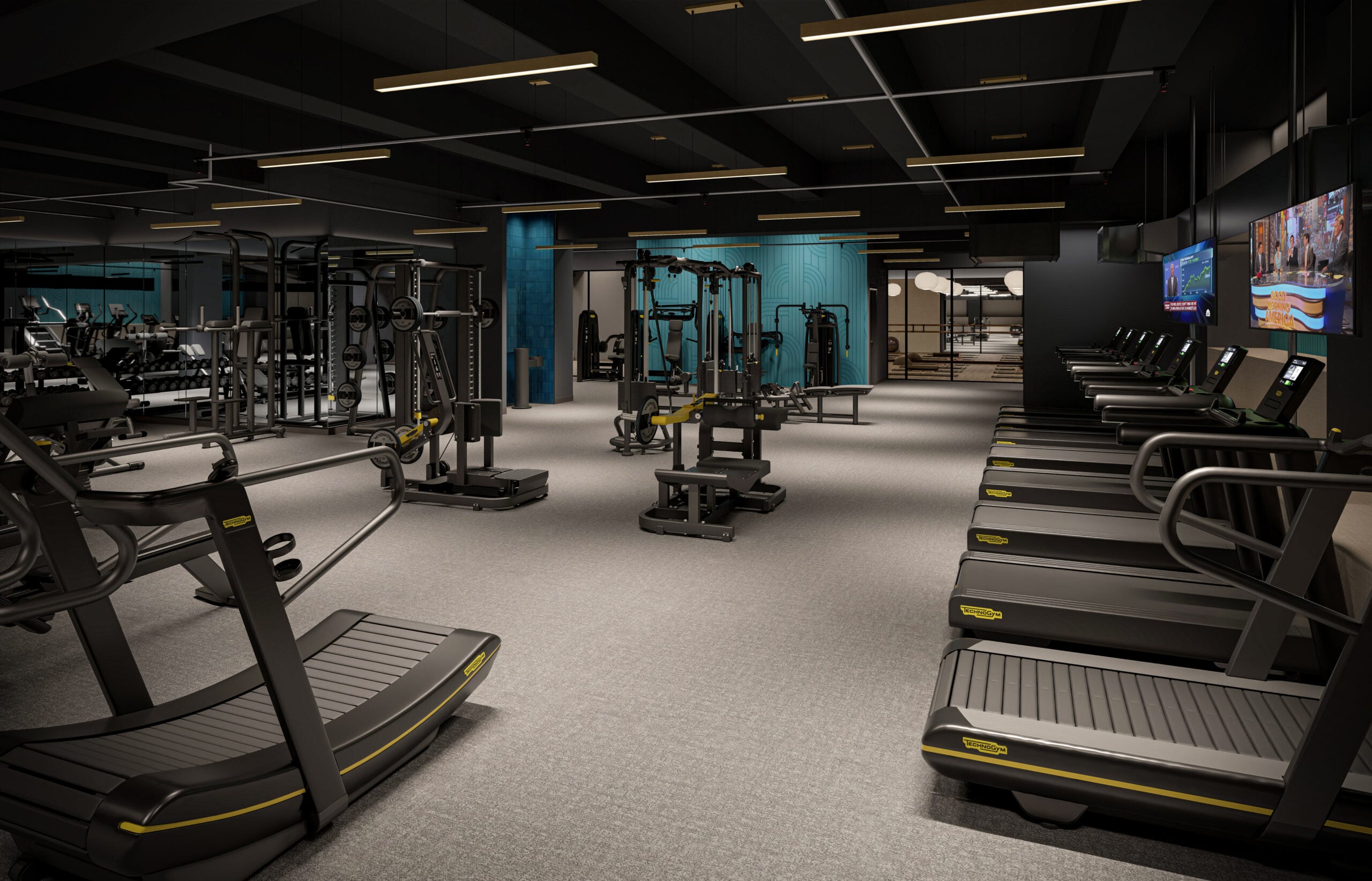
The pet-friendly, doorman building at 55 Broad St. has a gym, party room, pool, yoga studio, shared laundry room, and a roof terrace, though additional fees may apply to access some of those amenities. It’s located near the Broad Street subway station, serving the J and Z trains, and the Wall Street station, with service to the 2 and 3 lines.

Caption
A rendering of the rooftop pool at 55 Broad St., overlooking the Financial District.
Credit
Photo courtesy NYC Housing Connect
Developed by Metro Loft and Silverstein Properties, the former office building was once home to Goldman Sachs’ headquarters until the early 1980s. The two developers have been working since 2022 to convert the 36-story building into more than 500 CetraRuddy-designed apartments.
Caption
The developers expect to receive a tax break through a new incentive program aimed at encouraging office-to-residential building conversions.
Credit
Photo courtesy NYC Housing Connect
The apartments are set aside for New Yorkers earning 40 to 100 percent of the area median income (AMI)—a metric that depends on how many people you live with. Currently the AMI for New York City is $124,300 for a two-person household. The available apartments include studios as well as one-, two-, and three-bedroom units.
There are 41 studio apartments available for households earning from $73,749 to $103,680. The rent for these apartments is $1,967.
Caption
The landlords may charge extra fees for access to some of the amenities, such as the gym.
Credit
Photo courtesy NYC Housing Connect
Applications must be submitted online or postmarked no later than August 4th.
If you’re interested and think you might qualify for one of these apartments, you can create a profile and apply online via NYC Housing Connect. For details on this particular lottery, click here. Don’t apply more than once, or you could be disqualified.

Caption
A rendering of the lobby of 55 Broad Street, located between Exchange Place and Beaver Street.
Credit
Photo courtesy NYC Housing Connect
Winning a rent-stabilized apartment can be life changing: Rent increases are capped and lease renewals are automatic, providing long-term stability for NYC renters. Need more information on how the housing lottery works? Check out “6 steps for applying to NYC’s affordable housing lottery.”
For some advice from successful applicants read “How to land a rental apartment through NYC’s affordable housing lottery.” And if you or someone you know is having trouble with the application process, consider reaching out to a housing ambassador in the community.
Note: Brick Underground is in no way affiliated with New York City’s Department of Housing Preservation and Development or the Housing Development Corporation. If you are interested in applying to these or other affordable housing developments, please go to NYC Housing Connect for information and instructions.
Have you successfully won an apartment through the affordable housing lottery? If you have first-person advice to share about the process, we’d love to hear from you. Please send us an email. We respect all requests for anonymity.
You Might Also Like
The U.S. home flipping market showed signs of strain in the first quarter of 2025 as the number of flipped properties dropped to a six-year low and profit margins continued to erode, according to ATTOM’s Q1 2025 U.S. Home Flipping Report.
A total of 67,394 single-family homes and condominiums were flipped between January and March, representing 8.3% of all home sales.
While that share was up from 7.4% in the fourth quarter of 2024, it marked the smallest number of flips recorded in any quarter since 2018.

Margins shrink, investors cautious
According to the report, the typical gross profit on a flipped home in the first quarter was $65,000, down from $70,000 in the previous quarter. This equated to a 25% return on investment (ROI) before expenses — down from 28% in Q4 2024 and far below the 48.8% ROI seen in late 2020. The average investor paid $260,000 for a property and resold it for $325,000.
“The competitive home market means high prices, which is good for short-term investors on the selling end,” Rob Barber, CEO of ATTOM, said in a statement. “But that dynamic is also making it harder to find under-priced homes to buy up and it’s ultimately squeezing profit margins for the industry.
“It’s tricky to balance at times when the market looks like it could take a downturn. Investors don’t want to buy a property when prices are high and then see them drop before they’re ready to sell.”
Roughly 62% of flipped homes were purchased entirely with cash — a slight decrease from the prior quarter. Financing accounted for the other 38% of purchases, reflecting a relatively stable mix year over year.
Cash transactions were most common in Rockford, Illinois; Toledo, Ohio; and Buffalo, New York, where more than 81% of flipped homes were bought without financing.
Regional differences in activity
Home flips as a share of total sales increased in 132 of 173 U.S. metro areas analyzed, but annual comparisons tell a different story. Two-thirds (115) of these metros saw their shares of flips fall year over year.
The highest flipping rates were concentrated in the South. In Macon, Georgia, flips made up 21% of all home sales — the highest rate in the country. Warner-Robins, Georgia, followed at 20.6%, while Atlanta posted a share of 15.9%.
Memphis, Tennessee, and Akron, Ohio, rounded out the top five at shares of 14.7% and 13.3%, respectively.
Among larger cities with at least 1 million residents, the highest flipping rates were found in Birmingham, Alabama(12.8%); Kansas City (11.6%), Missouri; and Salt Lake City (11.1%). In contrast, Honolulu recorded the lowest share of flips at 4.7%, followed by New Orleans (4.9%) and Seattle (5.5%).
Profit margins down in most metros
Returns on flipping fell quarter over quarter in nearly 46% of metro areas and declined yea over year in 63%.
Some markets saw drastic drops in ROI. In Spartanburg, South Carolina, returns plummeted from 160.2% in Q4 2024 to just 31.3% in Q1 2025. Ocala, Florida, saw margins fall from 125% to 50.6%, while in Chattanooga, Tennessee, they dropped from 125.6% to 81.3%.
Large metro areas weren’t immune. St. Louis saw its typical ROI shrink from 49.3% to 27.3%, while in Fresno, California, the figure fell from 51.3% to 37.8%. Pittsburgh — even though it still boasts one of the nation’s highest ROIs at 100.4% — saw a quarterly dip from 108.7%.
Still, some markets delivered strong returns. Buffalo, New York, led the nation with a 102.1% ROI, followed closely by Pittsburgh and Scranton, Pennsylvania. Other high-performing metros included the Illinois cities of Peoria (89.1%) and Rockford (87.7%).
Larger cities with the weakest returns included Austin (1% ROI), Dallas (3.7%), and Houston (5%).
ATTOM data also shows that lower acquisition costs correlate with higher flipping profits. In markets where typical homes were purchased for less than $225,000, the median ROI was 46.4%. This dropped to 22% for homes purchased between $225,000 and $400,000, and just 19% for homes purchased for more than $400,000.
Today, President Trump called Fed Chairman Jerome Powell “Too Late” in a social post and said that he can save the country billions of dollars by shaving 2.5% off the Fed Funds rate. This is part of an ongoing Trump attack on the Fed Chair to cut rates, but is this strategy the best way to do it?
As I have written before, one reason the President is pursuing a lower Fed Funds rate is to support the financing of his tax cuts. By lowering the Fed Funds rate, we could see a reduction in interest costs, which might lead to significant savings amounting to billions of dollars. This discussion is particularly relevant as Republicans are actively working towards the passage of the “Big Beautiful Bill.”
However, the Federal Reserve doesn’t operate that way, so this is a non-starter for them. I think there’s a better game plan to try to convince the Fed to cut rates before it’s too late.
Focus on what the Fed cares about: Labor data
As I have discussed since late 2022, the Federal Reserve is more focused on labor data than the growth rate of inflation when determining how many rate cuts it can deliver for the economy. In his remarks at Wednesday’s press conference, Powell said that the labor market is strong and does not require rate cuts.
However, Powell also highlighted the challenges faced by unemployed Americans and the difficulty of getting a new job. Before Powell switched the game plan in 2022, making it about the labor market more than inflation, he noted he would like to see the Fed Funds rate mirror 3, 6 and 12-month PCE data. Well, if they were operating off those numbers, the Fed Funds rate would be close to 3% since this is the most recent data:
- 3-month annualized rate: 2.7%
- 6-month annualized rate: 2.6%
- April core PCE 12-month rate: 2.5%
- The headline PCE inflation report 12 months was at 2.1%
If tariffs lead to increased prices and inflation approaches 3% as the Federal Reserve has indicated, then, assuming this is a one-time price increase, lowering the Federal Funds rate to around 3.5% would still be above the Fed’s inflation target. This rate closely aligns with some people’s definition of a neutral policy.
If the Fed waits until the labor market weakens to take action, it may be seen as being slow to react again. Since the Fed often cites that their policy is moderately restrictive, they’re now issuing a note that they seem ok with the lack of hiring going on today. Remember that the Fed noted before the year started that if the unemployment rate starts rising above 4.2%, they would be concerned, but hat concern doesn’t seem to be present today.
Between 2022 and 2024, the Fed had the flexibility to wait because the labor market wasn’t breaking. However, the room for maneuvering regarding labor conditions is no longer as broad. Job openings are down and job growth has slowed to the extent that Powell admits it is becoming difficult to find a job. Jobless claims, measured by a four-week moving average, have been rising to year-to-date highs and continuing claims are now at a three-year high.
The closer you get to neutral with an inflation target of 3%, the less catch-up the Fed might have to do if they wait to see the labor market getting weaker, as they did in 2024. Let’s not forget that two meetings ago, Jerome Powell openly admitted that they were late to cut rates, as the labor data was weaker than they had realized. They were playing catch-up to the data.
For the first time in many years, the labor data year-to-date is underperforming my forecast. I noted in my article about jobs Friday that Powell needs to see real labor damage to cut toward neutral policy. Now, with the 12-month growth rate of inflation being at 2.1%, you can see why I always focused on labor over inflation.
Conclusion
My advice to Trump is to focus the discussion about Fed rate cuts on the labor market rather than interest expenses. The Federal Reserve doesn’t prioritize interest rates in that way, and Americans may not resonate with that argument when it comes to budgeting.
Instead, Trump should emphasize Powell’s statement about the difficulty of finding jobs and highlight the Fed’s history of waiting too long to respond to labor data over the decades. This approach will frame the debate around the labor market and the challenges facing American households, which are more directly relevant to people’s daily lives than the issue of interest expenses.
For those in the real estate and mortgage industry, remember that 65%-75% of the movement in the 10-year yield and mortgage rates is driven by Fed policy, which is why Fed interest rate hikes and cuts matter.
The people who work at the Fed are human and like all human beings, they can feel the pressure if a proper, consistent message is being discussed. For me, Americans can relate more to the labor data than interest expense savings and the Fed will feel the pressure if the labor data gets weaker.
FHFA Director Bill Pulte called for Federal Reserve Chairman Jerome Powell to resign today, shortly after President Trump urged Powell to cut the Fed funds rate by 2.5% in a social post.
This follows the Federal Reserve’s decision yesterday to keep the Fed Funds rate unchanged. Although Powell pointed out the challenges of finding a job right now, he said the Fed is not planning to cut rates anytime soon due to uncertainty regarding tariffs. This is despite the most recent Personal Consumption Expenditures (PCE) data showing headline inflation at 2.1% year-over-year. Read my take on that decision here.
As you can see below, the unemployment rate is at a level where the Fed said in 2024 would make them uncomfortable if it started to head higher.
The Fed admits it’s still restrictive
Wednesday’s press conference probably wasn’t the best one for Powell, where he stated that the labor market is challenging for those looking for a job, but the current unemployment rate, rising toward 4.2%, still indicates a strong labor market. If the Fed were working from a more neutral policy stance, Powell’s take might be more understandable, but they’re not at a neutral policy.
Housing construction not growing for years
Yesterday, the housing starts data reflected a long-standing trend: the housing construction growth cycle reached its peak in 2022 and since then progress has been quite limited. In my article, I write that homebuilders seem hesitant to issue new permits given the current mortgage rates around 7%. However, a rate decrease to 6% could potentially stimulate activity in the housing market and encourage growth nationwide.
The charts below speak for themselves!
Single-family construction peaked years ago
Housing starts and permits are at early COVID-19 recession levels
The Homebuilders Confidence Index is almost back to the lows of COVID-19
Understanding the importance of residential construction to the economic cycle and job market is crucial. When workers in residential construction lose their jobs, a recession often follows. This is a pattern that the Federal Reserve and Powell tend to overlook repeatedly throughout various economic cycles. This insight helps explain why the President and Director Pulte advocate for lower interest rates.
As you can see, the housing market is critical not only to fight inflation with supply, which is the best way to deal with inflation, but also a key economic cycle indicator.
Conclusion
Expect increasing pressure on the Federal Reserve over the next 6.5 months. Our economy is facing several challenges that have confused the Fed and led to a more passive approach in their decision-making. I discussed this in detail on today’s HousingWire Daily podcast, where I highlighted a flaw in their thinking regarding the recent Fed meeting.
Once again, it seems things are about to get more interesting, folks!

Shane Tucker and partner Rebecca Maloney have sold their northern Gold Coast mansion
A race car driver has collected $5.65m from the sale of his Gold Coast mansion complete with an underwater bar and glass panel view to the resort-style pool.
The Helensvale property changed hands in an off-market deal handled by Ray White agent Jai Bower for a sum equal to the suburb’s residential record.
The 2021-built mansion on a 1,636 sqm lot at 23 North Bank Ct was owned by Shane Tucker, who was one of Australia’s highest profile drag racing competitors, and his wife Rebecca Maloney.
Records show the couple paid $1.08m for the vacant block in 2017, entrusting Stuart Osman with the design and Resolve Construction with the build.

Shane Tucker and Rebecca Maloney pictured at a Gold Coast event

Tucker founded a tequila brand with former Olympian Jesse Ross (left)
MORE NEWS
Gold Coast pink palace on the market
Aussie homeowner’s jaw-dropping confession
Epic mountain retreat up for grabs
Pro Stock driver Tucker splits his time between Australia and Texas in the US, and owns a tequila brand with partner Jesse Ross, a former Australian Olympic boxer.
The sleek five-bedroom, six-bathroom house had been listed with another agent last year but didn’t sell.
Its features included a lavish master bedroom overlooking the Coomera River, kitchen with Caesarstone waterfall island and butler’s pantry, a media room and office.
Designed for entertaining, the home also has its own “wellness retreat” with a six-person sauna, full gym and spa, while the pool’s glass panel provides a unique water view from the basement-level cocktail bar.

The sale equalled a suburb record set by another home in the same estate

The showstopping bar with underwater viewing panel
“This is an exceptional residence setting a new benchmark for luxury family living,” Mr Bower said.
He said a 6m high entry foyer set the stage for “opulence” throughout the home, with high-end finishes including timber cantilever stairs.
“Open-plan living areas connect the interiors to resort-style outdoor spaces, and a central mezzanine with floor-to-ceiling glazing and a ceiling void allows natural light to pour in.”
Mr Bower said the home was positioned on a coveted north-east facing block just moments from the main river, and with 40m of water frontage.

The home has 40m of water frontage

There are five bedrooms including a lavish master
The sale matched another Stuart Osman-designed mansion in the same estate which changed hands for the same amount in July last year.
River Links estate is currently one of the only waterfront estates in the northern Gold Coast that has direct access to the ocean and no body corporate fees, the agent said.
PropTrack data shows Helensvale’s median house price was up 4.1 per cent over the last 12 months to a median of $1,217,750.
The post Race car driver’s pool party pad has an underwater bar appeared first on realestate.com.au.
Inner Brisbane downsizers are being offered the chance at luxury units right where their old homes were, without sacrificing space in their new apartments.
Developer Arden Group has announced Park House on Crosby: a complex made of 56 luxury residences, overlooking Crosby Park in Albion.
The residences are being designed for wealthy downsizers in the area, looking to have an easier apartment lifestyle without changing where they live.

Park House on Crosby in Albion: developed by Arden Group and designed by Cottee Parker.
Each unit in the building has been created with a large open-plan layout, designed by architects at Cottee Parker to feel more like a house than an apartment.
Cottee Parker principal and manager of interiors, Dee Passenger, said the development represented a rare opportunity for wealthier buyers in Brisbane’s increasingly competitive market.
“This is a pretty unique project, especially for its location,” she said. “Typically apartments aren’t very large in that sort of precinct. So what this developer has done is they’ve seen a gap in the market where people are downsizing but want to stay in the area that they were living, in a proper home.”

The design concept was to make luxury homes near the city that downsizers could enjoy, without sacrificing the size of a house.

The complex is designed to connect with several green spaces within and outside of the building, with several shared amenities for the residents.
Ms Passenger said the complex was built with a “biophilic” design: “where we bring plants and natural things into the facade of the building, into pots and plants that surround the perimeter, and bring that green landscape in.”
“Even though you’re in an apartment, you feel connected to nature,” she said.
Each unit in the development is said to offer oversized balconies with views of the city or the park, and 12 penthouse and luxe apartments are available as corner units at a higher elevation.
Residents will also share amenities such as an infinity pool, spa and gym, along with rooftop entertaining spaces and BBQs where they can get to know one another.

Details on sales are expected to come in July.
“These amenities and spaces are really a way of bringing that community together,” Ms Passenger said. “It’s a small boutique building. You’re not sharing it with [lots] of other people, so you’ve really got that village neighbourhood feel … everyone will get to know everyone.”
Prices begin at $2 million, according to their website, with further details to come in July.
The post The surprise path to downsizing in comfort while staying near the city appeared first on realestate.com.au.
 JKDS is a licensed New York State real estate brokerage firm. #10351200205