

The franchisor’s performance was driven by its luxury brands during the first quarter. President and CEO Ryan Schneider also reaffirmed during an investors’ call the company’s stance on recent moves by NAR, Zillow and Redfin in regards to Clear Cooperation.
If you’ve ever thought about purchasing a summer place or investment property in the Hamptons and its environs but couldn’t swing the steep price tag, there just might be a way to live the dream—you can buy into a hotel condo or co-op, which are numerous in this area and can be a fraction of the cost of a single-family house.
That’s important to know because home prices in this stretch of paradise are still at an all-time high—in the first quarter, the median sales price exceeded $2 million for the first time, up 13 percent since last year, according to the latest edition of the Elliman Report. And the median price for condos on the East End in particular has skyrocketed over 200 percent since last year, hitting $1.96 million.
Being able to come up with enough money is not the only consideration, however. A vacation investment property can require a lot of work: You need to find renters and maintain the property, not always an easy feat when you don’t live nearby.
But with a hotel condo or co-op, you own the apartment, and you (or anyone who rents your place) can enjoy the hotel’s amenities as well as housekeeping and other hotel services. A management company will rent the property on your behalf so you can be as hands-off as possible.
[Editor’s note: A previous version of the article ran in May 2023. We are presenting it again here with updated information for April 2025.]
In this week’s Buy Curious, Florence Costello of Martha Greene Real Estate and Justin Agnello, Hara Kang, and James Keogh, known as the Atlantic Team of Douglas Elliman, tell you everything you need to know about purchasing a place in a condo/co-op hotel in the Hamptons area, including where to find them, how much you’ll be shelling out each month, and if you can expect to see a return on your investment.
The question:
I’ve heard that a condo or co-op hotel in the Hamptons might be a good option for a low-key investment property. Does that ring true? If so, can you tell me more?
The reality:
If you want to own an investment property in the Hamptons area but don’t want to do any of the work typically involved in property ownership, a condo or co-op hotel could definitely work for you.
The advantages are numerous: Someone else will take care of finding renters, allowing you to earn money on your property when it’s not in use. You don’t need to clean the unit or change the bedding after you or your renters leave. And you’ll be able to sit back, relax, and watch it all unfold from afar.
“I can’t think of any cons to doing this,” Costello said.
What are the sought-after condo/co-op hotels?
Montauk Manor (which Costello represents) is a highly desirable destination in Montauk, according to the Atlantic Team. The views are phenomenal, the staff and management are world-class, and the overall ambiance is delightful, they said. Amenities include indoor and outdoor pools, a day spa, an exercise room, tennis courts, an Italian restaurant, a driving range, a putting green, outdoor yoga classes, and electric vehicle charging stations.
Also in Montauk is The Surf Club, which offers rare one- and two-bedroom duplexes with ocean views. The club has a heated outdoor pool, fitness center, direct beach access, free parking, outdoor movie nights, yoga and Pilates classes, and concierge services.
The Beach Plum Resort, another Montauk locale, offers direct beach access, a heated pool, complimentary wifi, and outdoor grills. There are even play areas for kids, making it an excellent option for families.
Direct beach address, a heated pool, sauna, fitness room, and tennis courts are on deck at The Beachcomber Resort at Montauk, a seasonal community that is open from April 25 through the end of October (exact dates subject to change).
Dune Resorts owns several co-op properties in the Hamptons, with three in Montauk. The Atlantic Bluffs Club is a co-op community within walking distance of the beach and town. Ocean Colony, a beachfront resort, offers two tennis courts, a large private beach, and a clubhouse with ping pong and board games. Soundview Montauk, located on Block Island Sound, is a seasonal resort with an outdoor pool, playground, private sun deck, and a picnic area with barbecues.
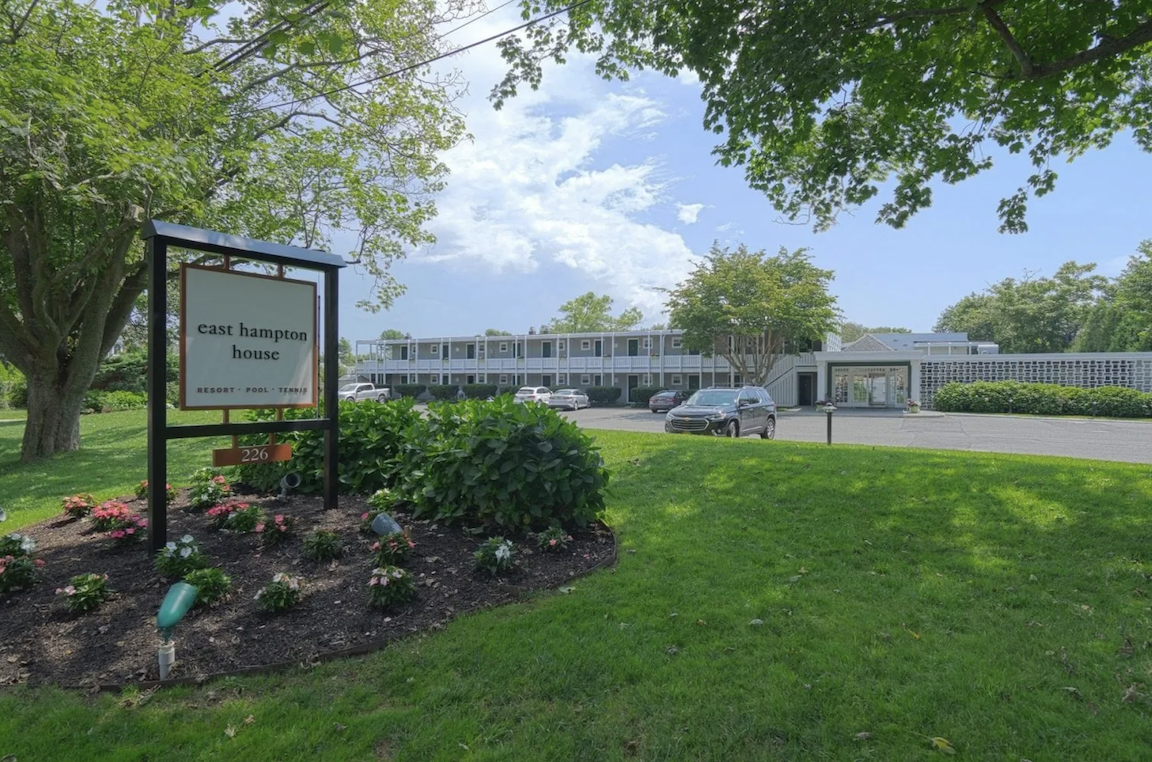
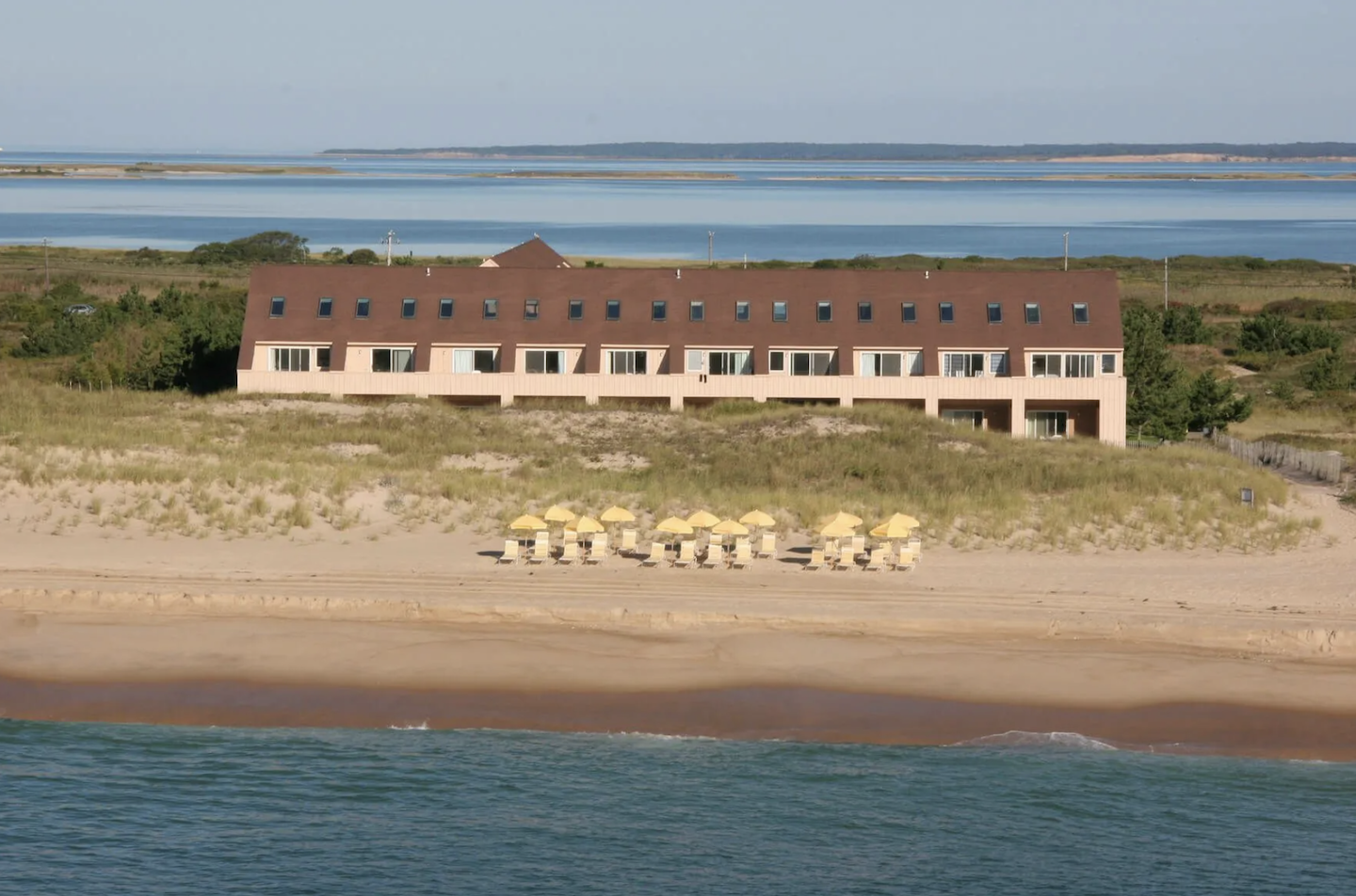
Other Dune Resort properties include Windward Shores, a year-round resort consisting of 45 townhouse-style apartments situated along the Napeague Stretch between Amagansett and Montauk; it has two tennis courts and cabana service on the private beach with lounge chairs, sun umbrellas, and towels; East Hampton House, situated on five acres of manicured lawns within walking distance of the village, offers a heated outdoor pool, fitness center, two tennis courts, and barbecue grills; and The Hermitage, a seven-acre resort with studios and one- and two-bedroom condos plus seasonal features counting two tennis courts, cabana service on the private beach, and on-site parking. All Dune Resorts’ properties have heated pools and high-speed wifi. Be sure to check its portfolio of investment opportunities, which is updated frequently.
Another popular spot in Amagansett is The Ocean Dunes, an oceanfront co-op resort with a heated outdoor pool and private beach access.
How do you rent out a hotel condo/co-op?
“The building takes care of it all,” Costello said. In most cases, either an in-house or outsourced management company handles the entire rental process, meaning your work is complete once you’ve purchased the property and added it to the rental pool.
You may have the option to do the turnover and sourcing yourself, but that process can be burdensome, according to the Atlantic Team.
Costello added that in her experience with Montauk Manor, most people keep their properties in the rental pool for the summer season—which typically runs from early May to November—to maximize profits. In the off-season, the owners enjoy their spaces.
What can you expect to pay in maintenance?
Fees will vary from unit to unit and complex to complex. Many Hamptons-area resorts close for the winter months and therefore have lower maintenance fees.
If you buy in a complex that stays open year-round, you will have to factor in winter maintenance, which can be steeper thanks to the weather, according to the Atlantic Team.
A rough estimate would be total fees that range from $800 a month on the low end to over $2,000 a month on the high end.
How big do these properties tend to be?
Most of the units at these condo/co-op hotels are studios and one bedrooms, ranging from 400 to 500 square feet.
Some larger, two-plus-bedroom units can also be found at most resorts; they are significantly more expensive and come to market less frequently.
Can buyers expect to see a return on their investment?
Once the maintenance fees and all other associated costs are factored in, an owner can still end up in the green, according to members of the Atlantic Team.
Costello added that while purchasing one of these types of properties isn’t as foolproof as putting money into a CD, “it will eventually pay for itself.”
Do owners mingle with hotel guests?
In most cases, the answer is yes—especially at amenity spaces like the pool and fitness center as well as common areas.
Some resorts separate private residences from rentable hotel rooms, while others don’t. If this is important to you, be sure to ask.
Is it hard to get a mortgage for a unit in a condo/co-op hotel?
Unfortunately, yes, said our experts. As such, most people will need to pay cash for these types of properties.
And according to at least one loan officer, the reason for this is simpler than you might think. “We’re not in the business to lend to hotels,” she said. “We do residential lending.”
However, if the condo/co-op component of the property maintains its financials separately from the hotel portion, some banks may consider it. In these cases, you should have enough liquid assets to cover at least six months’ worth of mortgage payments, a strong credit score and history, and a debt-to-income ratio of no more than 45 percent.
Check out these condo/co-op hotels in the Hamptons/Montauk area:
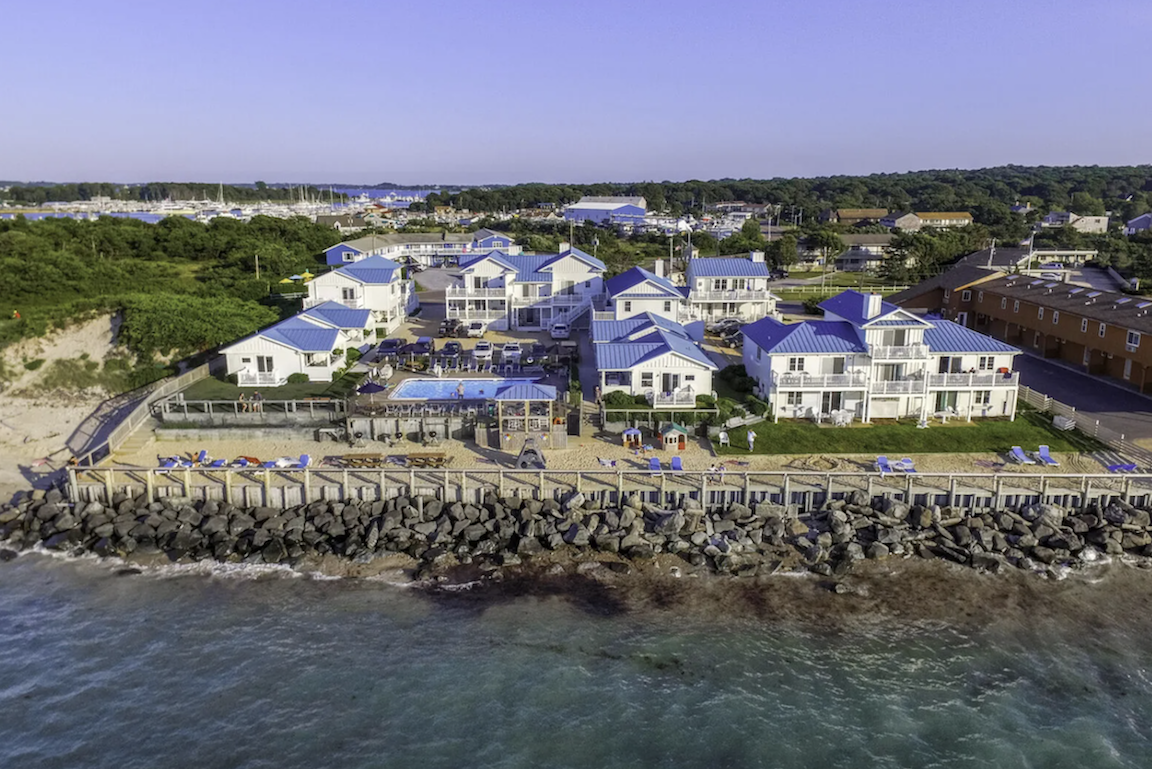
6 Soundview Drive, North Deck, Montauk
Part of Dune Resorts’ Soundview Montauk seasonal community, this upper-level one-bedroom co-op is listed for $699,000 and has monthly fees of $1,450. The corner unit features double exposures and a wrap-around sun deck and shares an outdoor pool and other resort amenities.
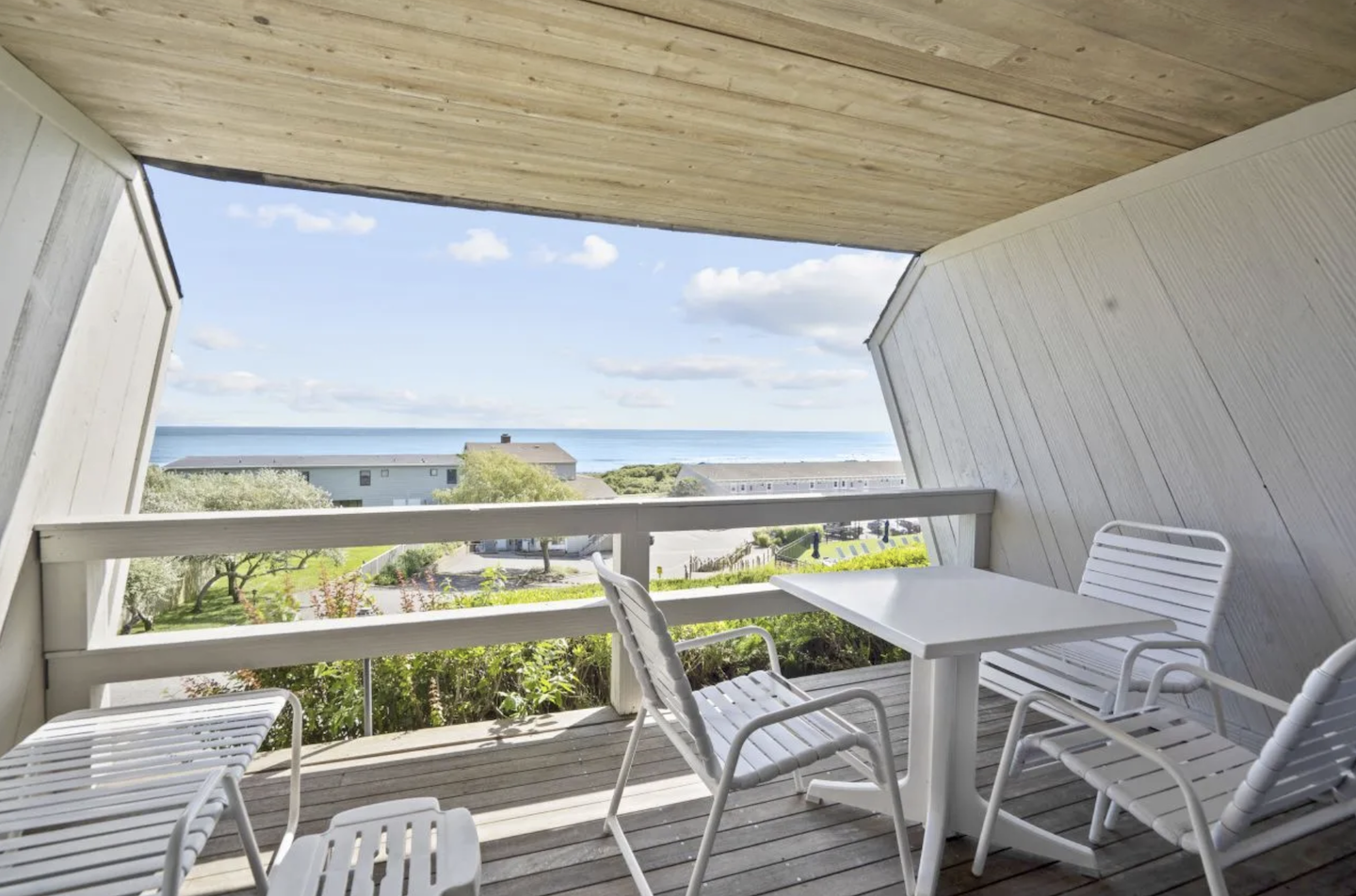
727 Old Montauk Hwy., #401, Montauk
Asking $539,000, this recently renovated corner studio co-op has double exposures, an oceanview balcony, open efficiency kitchen, and a private storage room in the full basement. The monthly fees are $973. Amenities at The Beachcomber Resort include a heated pool, tennis courts, direct ocean access, and a gym with a sauna.
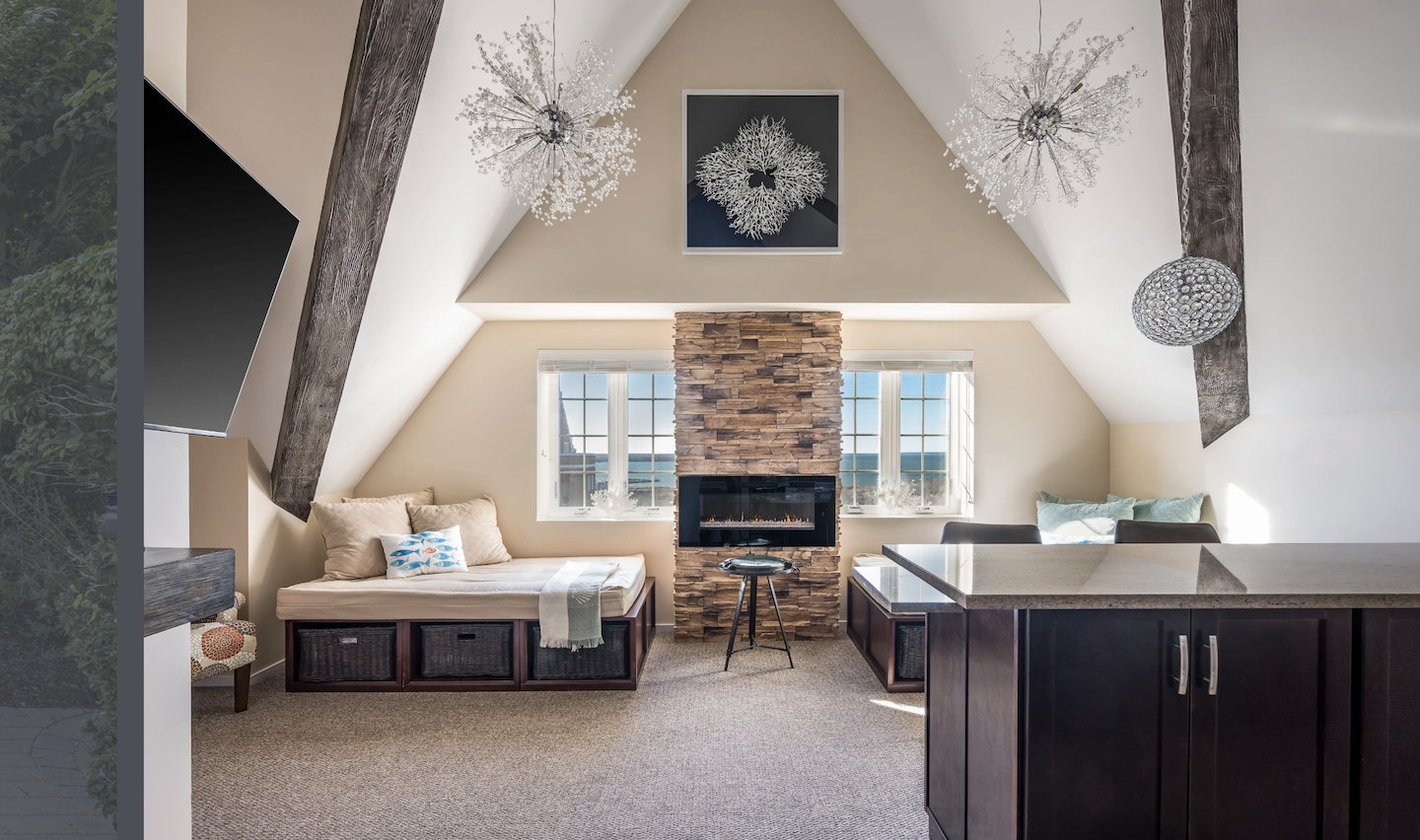
236 Edgemere St., #406, Montauk
This renovated 580-square-foot one bedroom, listed for $485,000, has one full bath, an open kitchen with granite island, vaulted ceilings, built-in daybeds, an eco-friendly fireplace, and views to Fort Pond Bay, Gardiner’s Island, Orient Point, and Plum Island. It’s located at Montauk Manor, which offers an on-site restaurant, indoor/outdoor pools, tennis courts, an exercise room, and a grand lawn. Monthly maintenance is $2,184; annual taxes are $1,616.
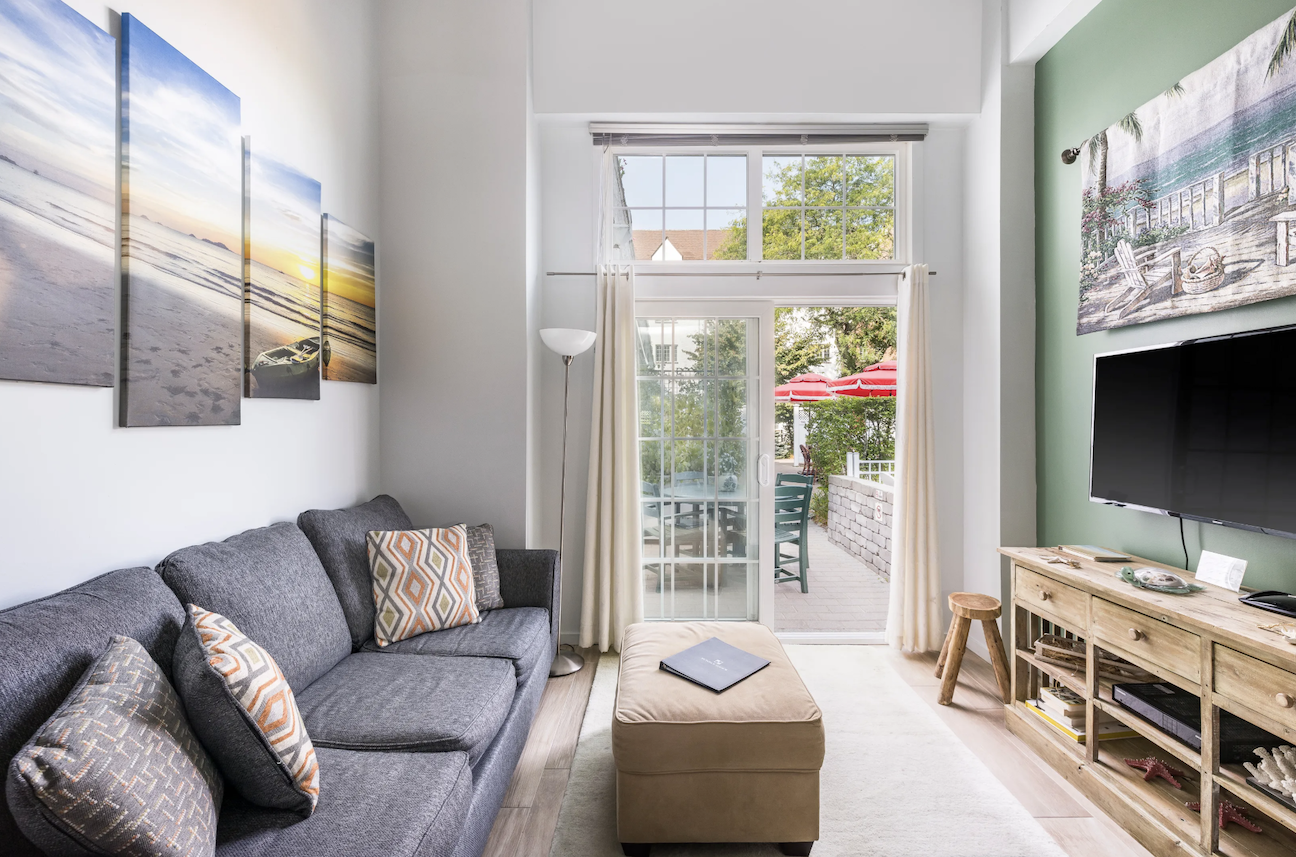
236 Edgemere St., #101, Montauk
Also at Montauk Manor, this updated 476-square-foot condo has a loft bedroom and bath, an open kitchen, and a 97-square-foot private patio with direct access to the outdoor pool and courtyard. It is listed for $465,000, with a monthly maintenance fee of $1,416 and annual taxes of $1,033.
226 Pantigo Road, #310, East Hampton
This listing, priced at $509,000 and with $988 in monthly fees, is part of Dune Resorts’ East Hampton House and shares access to a brand-new outdoor heated pool, tennis courts, a fitness room, and a guest laundry facility. The upper-level deluxe studio features a full bath, living room, and an “amenity station” equipped with a mini-fridge, microwave, and coffee maker. A semi-private sun deck overlooks the manicured grounds.
2062 Montauk Hwy., #28 Amagansett
A lower-level studio co-op, located at Dune Resorts’ Windward Shores, is on the market for $549,000 and has monthly fees of $1,184. The 369-square-foot unit features a full kitchen and bath, as well as an outdoor patio. Amenities include an outdoor heated pool, tennis courts, and a private beach with cabana service during the summer.
You Might Also Like
South Australians on low incomes are facing the very real risk of homelessness, with new research showing only one per cent of advertised rentals are affordable to them.
The situation is even more dire for single people – including those on parenting payments with two children – with not a single rental meeting their income threshold.
Anglicare Australia’s 2025 Rental Affordability Snapshot, released today, was taken on March 15 and reveals large groups of individuals and families competed for only 1836 private rentals advertised in SA – a marginal 12 per cent increase compared to the previous year.
Of the 1836 listed properties, just 19 homes, or one per cent of listings, were affordable for households on income support payments, while for a single person with one or two children
on parenting payments there were no affordable properties.
Meanwhile, 234 properties, or 13 per cent of listings, were affordable for households on a minimum wage representing a 2 per cent decrease compared to the previous year.
MORE NEWS
Revealed: 370 Aus homes to be knocked down
Tweak that could unlock homes for 400,000 Aussies
Surprise number of families locked out of their own suburb

Head of Housing Operations at Believe Housing Australia, Stacey Northover.
Nationally, the ACT ranked worst for rental affordability, with no rental property deemed affordable for singles on Jobseeker, parenting support payments, disability support payments and age pension.
Believe Housing Australia Executive General Manager, Housing Services, Stacey Northover said the Snapshot confirmed what most South Australians already knew: the shortage of
housing, soaring rents, stagnant wages, and inadequate government support are pushing ordinary people toward homelessness.
“When families are forced to choose between shelter and basic essentials like food, medicine,
warmth, and hygiene, and the housing market is not just unaffordable – it is unsustainable,” Ms Northover said.
“When families are forced to live in cars, tents, and motels, these are not just individual tragedies – they are social, welfare, cultural, and economic risks that bring long-term consequences for the state.”

Source: Anglicare Australia
She said South Australia was feeling the housing affordability crunch more acutely than many parts of the country and while every level of government had placed renewed focus on the housing issue in the state, this crisis demanded more than attention – it demanded action.
Incremental increases in Commonwealth Rent Assistance and one-off supplements were not keeping pace with real-world pressures, she said, and without systemic reform, thousands
would remain locked out of safe, secure housing.
Panorama apartments offering cheaper rent for South Australians
Tackling the housing crisis head-on is a new $13.7m, four-level apartment building at Panorama, which provides 23 affordable rentals significantly below the market rate.
The Believe Housing Australia-led project was delivered with the help of Housing Australia Future Fund, a dedicated investment vehicle to help build social and affordable housing faster.
During the recent snapshot weekend, HAFF funded homes made up eight of the 19 homes (42 per cent) deemed affordable and appropriate for households on income support payments.
University students Ali and Parya are among the tenants to secure an affordable home within the new Panorama development.

Ali and Parya at their Panorama home. Picture: David Klar
The young couple, both 25 years old, met five years ago and were engaged two years later, until recently they had been living part-time with each other’s parents.
“Ever since we got engaged, we’ve been looking for housing. But everything was outside of our budget,” Ali said.
“We’re both at university, I’m a PhD student and Parya is studying pharmaceutical science. Thankfully we have scholarships but in the current climate, it doesn’t really amount to much.
“With my research, I needed to stay within a reasonable distance to Flinders University, but everything was just completely out of our price range – we just couldn’t afford it.”
Ali, who is months away from completing his studies into multiple myeloma (blood cancer) and the design of nanotherapeutic treatments, said when they heard about the Panorama development, they jumped at the opportunity to apply.
“You propose to someone, and you try to build a life together, but you’re essentially jumping from house to house,” Ali said.
“But now this is incredible, and everyone living here has been in a similar situation struggling to find a home – it’s such a great community.”
The post ‘Long-term consequences’: Rental market failing most vulnerable appeared first on realestate.com.au.
There is not a single property across Australia – or even a room in a shared house – that’s affordable for someone on youth allowance, according to a new report from support organisation Anglicare Australia.
And just three properties were deemed affordable for those on a JobSeeker allowance.
The 2025 Rental Affordability Snapshot, released this week, surveyed 51,238 rental listings across Australia on March 15, with the result painting a bleak picture.
Of the rental listings surveyed across all states and territories, only 352 homes (0.7 per cent) were affordable for a person earning a full-time minimum wage, while just 165 rentals (0.3 per cent) were affordable for a person on the Age Pension.
The situation got even more dire for a person on the Disability Support Pension, with just 28 rentals (0.1 per cent) deemed affordable.
A person on JobSeeker, meanwhile, had the choice of just three rentals, while not a single rental was affordable for a person on Youth Allowance.
Banks, Bennelong, Bradfield and Cook in New South Wales topped the list of Australia’s least affordable suburbs, according to the data with Goldstein in Victoria round out the top five.
MORE NEWS
Revealed: 370 Aus homes to be knocked down
Tweak that could unlock homes for 400,000 Aussies
Surprise number of families locked out of their own suburb

Source: Anglicare Australia
With the 2025 Federal Election only days away, Anglicare Australia Executive Director Kasy Chambers said all parties and candidates needed to act on housing affordability.
“Australia’s housing crisis is the worst it has ever been,” she said.
“We keep hearing that this election is about living costs, but housing is the biggest cost facing Australians.
“The housing crisis is climbing the income ladder, and people on lowest incomes don’t stand a chance.”
Ms Chambers said less than 1 per cent of rentals were currently affordable for a full-time worker on the minimum wage.
According to PropTrack, the national median rental price for a house now sits at $650 a week and at $640 for a unit.
By comparison, the maximum fortnightly Youth Allowance for a person over 18 without kids is $663.30 and $836.60 for a person with children.
MORE NEWS: The 43 Aussie suburbs where you can buy a home for under $400k

Source: Anglicare Australia
“Across the country, there are 74 electorates without a single affordable rental for someone on the minimum wage,” Ms Chambers said.
“Voters are desperate for action. Instead, parties are promising more of the same. At best they are overlooking those who need the most help, and at worst, they are making promises that could overheat the market and push costs up.”
Ms Chambers said that the Government must step up instead of leaving housing to the private sector.
“The Government spends eight times as much propping up private investors as it does on building homes for people who need them. This approach is wrong, and it’s supercharging rents and house prices.
“These results show that housing cannot be left to the private sector. We’re calling on the next parliament to ensure that rentals are affordable by building rentals people can afford, and by fixing Australia’s unfair tax system.
“If the next parliament fails to take action, this crisis will only get worse.”

Source: Anglicare Australia
The post ‘Just three properties’: Report paints bleak picture of Aus rental market appeared first on realestate.com.au.
The FHFA HPI and S&P CoreLogic Case-Shiller Indices posted a 3.9% annual increase in February, according to data released Tuesday. While that marks another year of gains, the data shows that price growth has moderated.
A $1.95 trillion asset cap that’s limited the bank’s growth could be lifted in Q2 with CFPB and other regulators having closed 12 of 14 consent orders aimed at remedying past business practices.
Airbnb challenged the commercial, along with ads that included a “desperate” and “confused” billboard near Airbnb’s headquarters in San Francisco.
Home-price growth cooled slightly as the spring purchase season enters May.
The S&P CoreLogic Case-Shiller Home Price Index for February rose 3.9% year over year, a slight decrease from the 4.1% annual gain in January. Over the winter, the market benefited from declining interest rates and rising inventory, allowing some buyers to enter the market.
But this occurred before President Donald Trump’s tariff policies kicked into high gear, which pushed mortgage rates back up to 7% and cast doubt on the economy.
“Waning consumer confidence, heightened economic uncertainties and the future of household budgets are impacting the consumer housing market,” Zillow chief economist Skylar Olsen said in a statement. “Unlike its normal countercyclical behavior, these early signs of an economic downturn have not brought lower mortgage rates along with it.”
The rise in the Case-Shiller Index is largely driven by the 10 largest cities in the country. The 10-City Composite increased by 5.2% annually in February, higher than the 4.5% growth for the 20-City Composite. But each of these gains were slightly lower than the prior month.
The city driving these increases is no surprise. New York City’s year-over-year gain was 7.7%, by far the largest for February. Chicago (+6.6%), Cleveland (+6.6%) and Boston (+5.9%) also posted substantial annual increases.
Other parts of the country, meanwhile, are experiencing sagging home prices. Tampa (-1.46%) is the only city in the 20-City Composite with an annualized decline. It also saw home prices drop by 0.34% compared to January.
While 11 of the 20 cities saw prices fall between December and January, only two fell between January and February. The other one is also in Florida, as Miami‘s prices dropped by 0.27% on a monthly basis.
The outlook for the rest of the spring is murky, due in part to tariffs. Despite Trump pausing the dramatic global tariff regime he announced on April 2, markets and households responded negatively, and an astronomical 145% tariff on China remains in effect.
The future of Trump’s tariffs is also cloudy, as he and members of the administration have signaled different paths forward that are often contradictory. Public opinion has soured on tariffs, and any expectation of higher inflation could temper demand for housing.
“High housing costs and widespread economic uncertainty have curbed buyer enthusiasm,” Hannah Jones, senior economic research analyst for Realtor.com, said in a statement. “Recent data shows that concerns about job security have increased, which could make both buyers and sellers more hesitant to enter the housing market until the outlook for the economy and job market becomes clearer.”
A U.S. appeals court on Monday restored a temporary block on mass layoffs at the Consumer Financial Protection Bureau, allowing employees to keep their jobs for the time being despite the Trump administration’s plan to cut the agency’s staff by 90%.
On Monday, Judges Cornelia Pillard and Gregory Katsas reinstated the ban on mass firings, saying it was necessary to preserve legal protections for workers while the case moves through the courts. In a dissent, Judge Neomi Rao, a Trump appointee, said the ruling “hamstrings the Executive and prevents the CFPB from downsizing until the merits of the appeal are resolved.”
The move is a blow to President Donald Trump’s push to dramatically restructure the CFPB, potentially whittling its workforce down to as few as 200 employees.
Reuters reported that agency staff have warned in sworn statements that such deep cuts would cripple the CFPB’s operations.
HousingWire exclusively reported last week that the cuts would see some mortgage-focused divisions cut down to a handful of staffers (or fewer). Doing so would push the regulatory burden onto the states, attorneys and mortgage compliance pros told HousingWire.
The CFPB — created in the aftermath of the 2008 financial crisis and originally championed by Sen. Elizabeth Warren — has drawn criticism from the Trump administration, as well as from some in Silicon Valley and Wall Street, who contend that the agency oversteps its regulatory mandate.
The CFPB has had several shakeups since the Trump administration assumed control of the agency. The Trump administration has moved to fire large numbers of staff, with both Trump and billionaire adviser and DOGE-leader Elon Musk advocating for the agency’s elimination.
In February, acting CFPB Director Russell Vought instructed agency staff to stop all work “unless expressly approved by the Acting Director or required by law.” In early March, CFPB employees were told to continue working on “statutorily required work.”
The administration has since shifted its stance, saying the CFPB will remain in place but with a significantly reduced staff.
Last month, a trial court temporarily blocked the mass layoffs. The appeals court has now revised that decision, permitting the CFPB to proceed with layoffs only after a “particularized assessment” demonstrates that the employees in question are not essential to the agency’s legally mandated duties.
After April 17’s attempted purge of nearly 1,500 workers, Judge Amy Berman Jackson scheduled a last-minute hearing the following day that temporarily blocked the layoffs and prevented the agency from cutting off the employees’ computer access as planned.
The CFPB did not immediately reply to HousingWire’s request for comment.
Inman proudly unveils the 2025 Ambassadors for Inman Connect San Diego, led by Head Ambassador Matt Richling.
 JKDS is a licensed New York State real estate brokerage firm. #10351200205